

Home › Insights › Manufacturing Insights

Most Unit Cost Is Designed In Long Before The Line Starts Up

Lean Manufacturing Principles And Manufacturing Insights From PPS

Lean, value engineering, and digital tools that cut cost, waste, and delay

Get each new manufacturing article from our engineers by email, free.

Insights

Lean Manufacturing Principles That Start In Design

Cut The Waste That Starts In The Design Before It Reaches The Floor

These articles apply lean principles where they save the most: in the design and the process plan, before waste reaches the floor. We write about value engineering, DFMA, setups, and flow. We also show how digital twins and simulation let a plant test a change before it moves a machine. Each one ties a principle to an engineering decision.

PPS engineers write every article from our design work and consulting in manufacturing. Use them to find cost in a product you already make or to plan a new line. They also help you judge which digital tools are worth the effort. When unit cost is the problem, have the design reviewed, not only the process.

FEA stress plot of a cast bracket beside a part cost chart, a value engineering review using lean manufacturing principles

One design moves through all seven topics. Simulation checks it, best practices shape it, and methodology proves the model matches the part. Manufacturing and sustainability set its cost and footprint. Leadership and project management keep each decision on time.

Start Here

Start Here: Our Core Lean Manufacturing Principles Article

Read One Core Article First, Then Go Deeper On Each Topic

How We Work

How Our Engineers Apply Lean Manufacturing Principles

Four Steps We Use On Client Work, And You Can Use On Yours

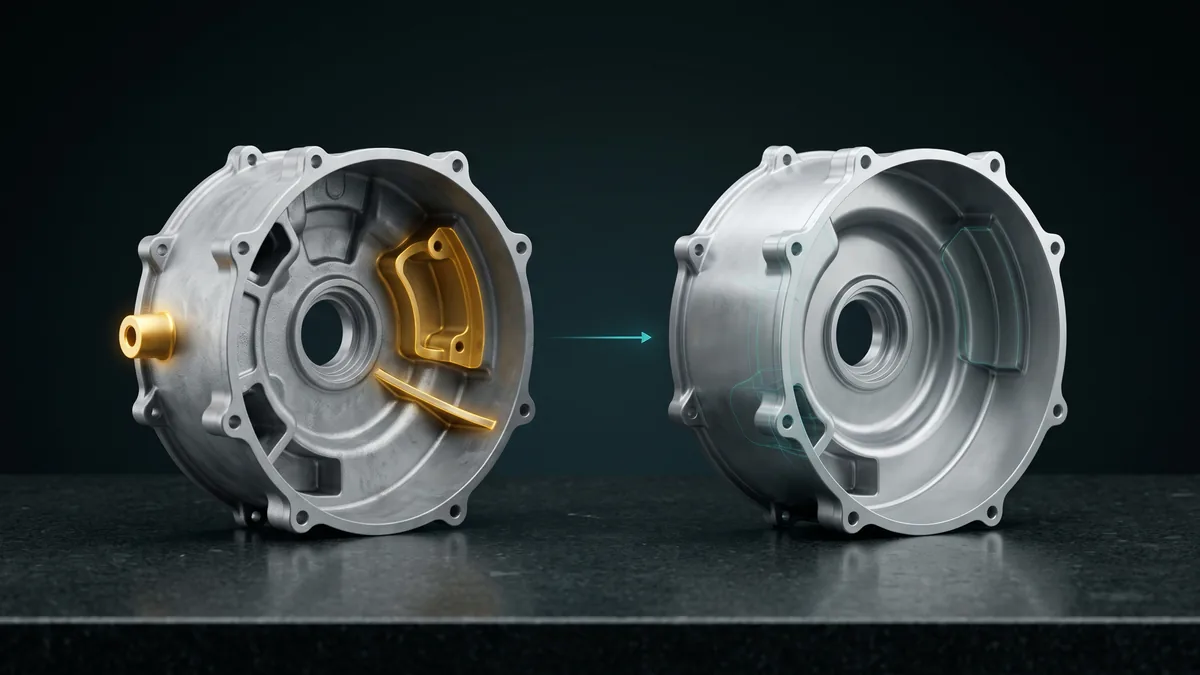
A cast housing with costly features highlighted in gold and removed, showing lean manufacturing principles applied in design
01

Trace Each Cost To Its Function

We apply lean manufacturing principles to the design first. Each part and feature is traced to the function it serves. That way, the cost you see on the floor traces back to the decision that created it.

02

Remove What Is Not Needed

Value engineering and DFMA remove what the function does not need. That means parts that should not exist, tolerances tighter than needed, and features that need a second setup.

03

Check Changes Before Cutting

Every change is checked in analysis before anything is cut. Lower cost never comes at the price of a part that fails in service or at final inspection.

04

Engineer Parts That Let Lines Flow

Your team runs the floor improvements. We engineer the parts, tooling, and fixtures so those improvements stick: fewer setups, faster changeovers, and features that only assemble one way.

Latest Articles

Latest Lean Manufacturing Principles Articles From PPS

Consulting In Manufacturing: Value Engineering, DFMA, And Flow

Value Engineering Articles

Digital Twin Articles

DFMA Articles

Our first manufacturing articles publish soon. Sign up below to get each one by email.
Engineering Insights

Get New Lean Manufacturing Principles Articles By Email

Real Engineering From Our Team, Sent When A New Article Publishes

  • New articles when they publish
  • Written by our engineers
  • Unsubscribe in one click
Put It To Work

Lean Manufacturing Principles Services From Our Team

When You Need The Design, Not The Article, Our Engineers Deliver It

DFMA Cost Reduction

Cut part count, setups, and assembly steps so the design costs less to build at any qualified shop you choose.

Fewer parts, less cost.

Covers

Part Count

Setups

Assembly

Explore DFMA Services

Value Engineering Review

Trace each dollar of unit cost to its function, then cut what the function does not need, proven in FEA.

Cut cost, keep function.

Covers

Function

Unit Cost

FEA

Explore Value Reviews

Digital Twin Services

Test a process or equipment change in a validated digital model before it moves a machine on your floor.

Test it before you move.

Covers

Process

Equipment

What-If

Explore Digital Twins
Where It Applies

Lean Manufacturing Principles Across Our Industries

See How The Same Methods Apply To Your Industry's Hardest Problems

Automotive

Late validation cycles delay vehicle launches across model-year gates.

Ready for the next gate.

Applications

EV Thermal

Crash

NVH

Explore Automotive

Mining Equipment

Bucket and structural failures shut down remote mines for days at a time.

Less downtime in the pit.

Applications

Wear

Fatigue

Heavy Haul

Explore Mining

Cement & Materials

Outdated kiln designs waste fuel and limit the use of alternative fuels.

Cut fuel waste in kilns.

Applications

Kiln CFD

Clinker

Alt Fuel

Explore Cement

Pharma & Chemical

Untested mixing dead zones trigger FDA findings and costly batch rework.

Validate before building.

Applications

Reactor CFD

Mixing

GMP

Explore Pharma
Free Checklist

Get The Lean Manufacturing Principles Cost Checklist

Questions That Trace Unit Cost Back To The Design Decisions

FAQ

Lean Manufacturing Principles Questions Readers Ask

Short Answers On Our Articles, Our Engineers, And Getting Help

Who Writes These Articles, And Where Do The Methods Come From?

Engineers write every lean manufacturing principles article on this page. The people who run PPS projects write about problems they see in real designs. They cover what went wrong, how they checked it, and what they would do next time. The articles teach methods, not sales pitches.

Cost advice from people who have never designed a part is easy to find and hard to trust. So each post names its author and shows when it was last updated. Nick Duff, Co-Founder & Chairman, CEO, is an aerospace stress engineer on flight-critical aerospace and defense programs. Tom Cushing, Co-Founder & CTO, is a licensed Professional Engineer (PE).

Tom leads the tools, methods, and design QC our engineers use from assessment to delivery. PPS engineers run FEA, CFD, CAD, and DFMA in-house. Every design goes through that QC, and the articles follow the same methods. You can read their full backgrounds on our About page. If an article does not match your own project, tell us and we will check. We reply within one business day.

Can I Use The Methods In These Articles On My Own Designs?

Yes. Each lean manufacturing principles article explains the method step by step, so you can apply it to your own design today. It covers what to set up, what to check, and what a good result looks like. We write for practicing engineers and the managers who lead them.

There is a limit, though. An article cannot see your loads, materials, volumes, or drawings. The same method can mislead you when the inputs are off. A tolerance set under ASME Y14.5 still depends on how the part works in your assembly. When cost or a safety margin depends on the answer, get a second look.

Use the articles to find cost in a current product, plan a new line, or train a new engineer. Bring the hard calls to us. That is what our free assessment is for. You send the data, and an engineer who can see the whole problem reviews your project scope. You get a roadmap that shows what we would check, change, or test next, and why.

Where Do Lean Principles Save The Most Money?

Lean manufacturing for engineered products save the most where the cost is decided, and most of it is decided in the design. A plant can remove waiting, motion, and rework. But it cannot remove a part that should not exist, or a feature that needs a second setup.

That waste survives every improvement event, because floor work never changes a drawing. NIST's Manufacturing Extension Partnership describes lean as removing waste so value flows to the customer. When a part forces three setups and hand fitting, flow stops at the same station every shift. The line pays for it in labor, scrap, and work in process.

So we start with value engineering and DFMA. We trace each part and feature to the function it serves, then remove or simplify what the function does not need. Every change is checked in analysis before anything is cut. Your team keeps running the floor improvements, now on parts that support them. Send us the drawings, volumes, and the cost breakdown you have. We reply within one business day.

Unit cost too high to ship? Get a free assessment and roadmap.

The Cheapest Waste To Remove Is The Waste You Never Design

Turn Lean Manufacturing Principles Into Lower Cost

Get The Lowest Total-Cost Design, Plus The Data And IP, From One Team

Send your CAD, data, and goals. We review your project scope in a free assessment and reply within one business day with next steps.

SDVOSB Certified
VOSB Certified
CAGE 8ZK73
NAICS 541330

On-site assessments that require travel are quoted separately.