Home › Engineering Consulting Services › Design For Manufacturing Services

Every Extra Part Adds Cost To Every Single Unit You Build

Design For Manufacturing Services That Cut Cost Before Tooling

Fewer parts, simpler assembly, lower unit cost, decided before tooling

Send your CAD and BOM. Get a roadmap to a lower-cost design. Free.

Is This Your Constraint?

When Your Product Needs Design For Manufacturing Services

DFMA Engineering Finds The Cost Hiding In Parts And Assembly

Most product cost is set by the design, long before the factory sees it. Design for manufacturing services review every part, fastener, and assembly step. Each one has to earn its place. Then we redesign the product so it is cheaper to make and faster to assemble.

When cost isn't designed out, teams fall back on one of two moves. Some push suppliers for lower prices on a design that is costly by nature. Others find the costly part, the slow step, or the extra fastener after tooling. By then, every change costs a new tool.

PPS runs DFMA reviews and redesigns alongside our engineering consulting services, CAD design services, and product development services. You get a design with fewer parts, simpler assembly, and a unit cost you can explain.

✓

Unit cost that suppliers can't bring down

The cost is in the design, not the quote.

✓

Too many parts and fasteners in one assembly

Every part adds handling, stock, and labor.

✓

Assembly steps that need special tools or skill

Slow assembly costs on every unit you ship.

✓

Parts made by a costly process

A different process or material could do the job.

✓

Quality problems that start at assembly

Parts that can go in wrong eventually will.

✓

Tight tolerances on parts that don't need them

Precision you pay for that adds no function.

51%
Fewer Prototypes
Source: PPS Innovation Edge white paper
34%
Less Rework
Source: PPS Innovation Edge white paper
37%
Shorter Test Phase
Source: PPS Innovation Edge white paper
Where Your Total Cost Hides

How Design For Manufacturing Services Lower Unit Cost

DFMA Engineering Turns Part Count And Assembly Into Decisions

Cost you carry

Decision it lets you make

Result

Unit cost

Material & weight

Decision

Question every part and fastener, then combine or remove what the product doesn't need.

→

Result

Fewer parts and a lower unit cost.

Development

Prototypes & testing

Decision

Score assembly and process cost before tooling, and use prototypes to confirm the new design.

→

Result

Faster assembly and fewer prototype loops.

Tooling

Rework & redesign

Decision

Find the costly process or feature in the design review and fix it before tooling is ordered.

→

Result

No redesign after first article; tooling is made once.

After launch

Field failures & warranty

Decision

Release a design with process, material, and tolerances matched to what your suppliers run.

→

Result

Lower supplier quotes and a cost you can defend.

Design Parts and Tooling That Let Your Production Line Run Lean

Lean on the floor only goes so far when the parts fight you. If a part needs three setups, a custom fixture and a skilled fitter, no kaizen event removes that waste, because it was designed in. DFMA takes it out at the source: fewer parts, fewer operations, tooling and fixtures built for flow, and equipment that changes over fast. Error-proofed features stop assembly mistakes at the part, not at inspection. Your team runs the floor improvements. We engineer the parts, tooling and equipment so those improvements stick.

Decision

Fewer parts and fasteners

→

Result

Fewer operations and less handling

Decision

Fixtures and tooling designed for flow

→

Result

Faster changeovers and less work-in-process

Decision

Features that only assemble one way

→

Result

Assembly mistakes stopped at the part

Looking for the floor-side principles? Read our lean manufacturing principles insights.

What You Get

What You Get From Design For Manufacturing Services

A Design Solution, Approved Data, Your IP, And Support After Delivery

01

The Design You Needed

A design that meets your loads at the lowest total cost, delivered as production-ready CAD and drawings

02

The Data Behind It

FEA results and margins you review and approve at each gate, before anything moves to prototyping.

03

The IP Is Yours

You own the IP by default, set in your contract.

04

Support After Delivery

If we missed it in our QC, we fix it. If your supplier can't make the part within three years, or supply dries up, we fix that too.

You send

What we need to start

CAD, native or STEP

Loads and operating conditions, or how the part is used

Material specs or test data, if you have it

Targets: weight, cost, life, or code

Failure history, if a part already failed

→

You get

What you hold at the end

The optimized design: CAD and drawings ready for production

Models and results you reviewed and approved

Documented margins or code compliance

Test correlation, when testing is in scope: a partner lab or yours

A roadmap for what comes next, and a team that stays with you

We price to the value we deliver, not the hours we log. If the value isn't there for you, we'll say so in the assessment.

How We Work · Service

How Our Design For Manufacturing Services Reach Final Design

DFMA Consulting For OEMs, From CAD And BOM To A Lower-Cost Design

01
Assess
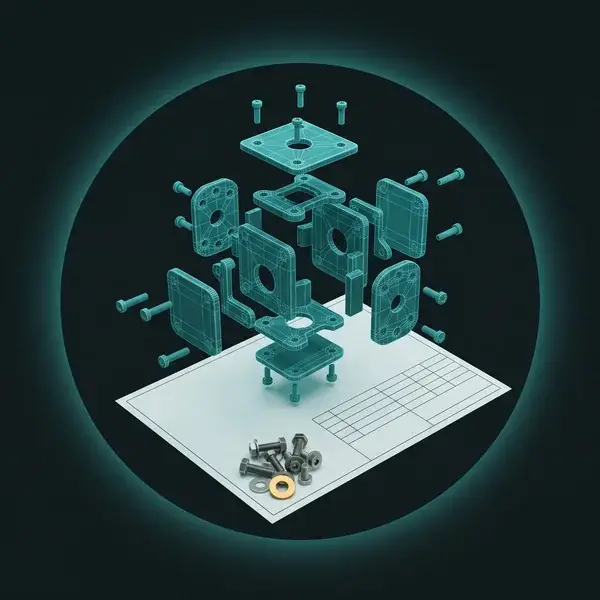
Exploded wireframe of a many-part actuator bracket on a blank parts list: the BOM design for manufacturing services review

We review your project scope and the data you have and screen where cost hides. You get: a free assessment.

02
Roadmap
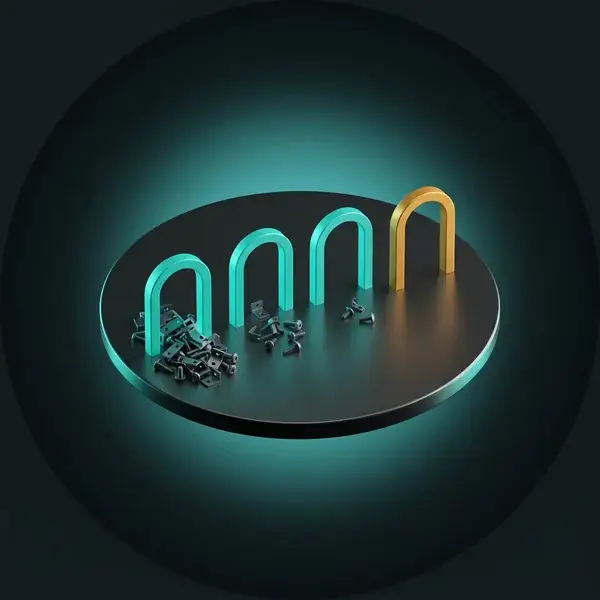
Teal gates on a disc with a parts pile shrinking at each one: the ranked savings in a design for manufacturing services plan

Scope, targets, and gates, from where you are to where you need to be.

03
Engineer
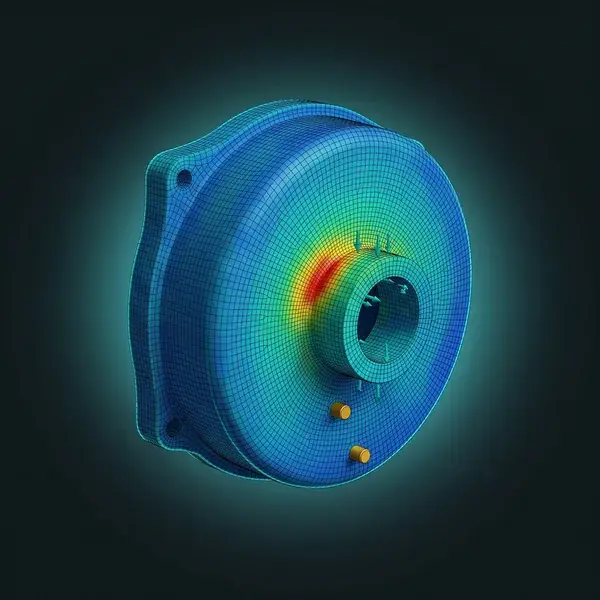
FEA model of a one-piece cast actuator housing, red at a mounting boss: DFMA engineering checks the new part carries load

DFMA analysis and CAD redesign, with prototypes when the design needs them. You get: data to approve.

04
Deliver
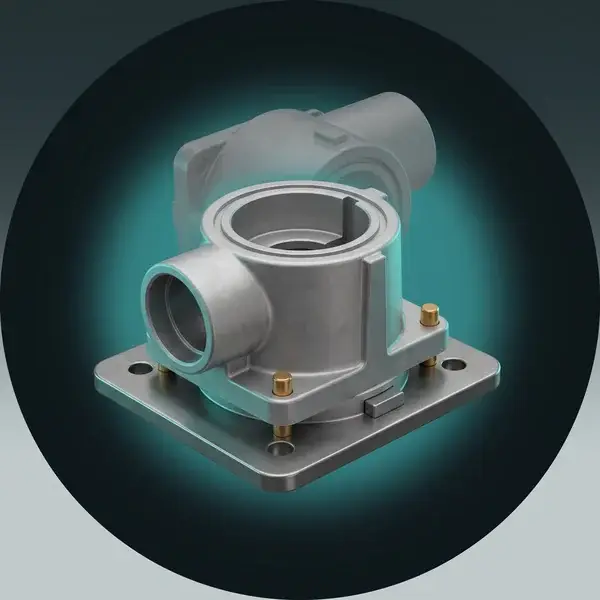
A cast actuator housing seats one way on offset gold pins: the mistake-proof part design for manufacturing services deliver

The design, drawings, and models, second-checked in our QMS.

05
Support
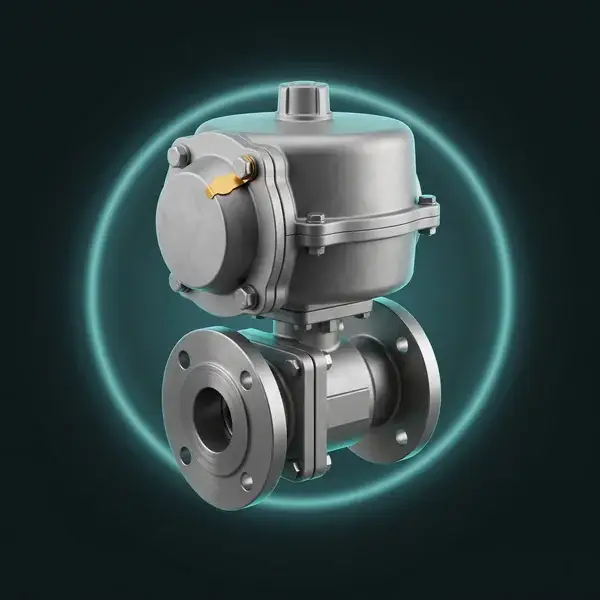
A cast actuator housing on a ball valve with a gold seal on one bolt: design for manufacturing services support after launch

We stand behind the design through production and supply issues.

PPS engineers run DFMA, FEA, and CAD as one loop. DFMA removes parts and cost. FEA checks that the new design still carries its loads. CAD changes follow, and supplier cost is checked before tooling. The design you approve is the design that ships.

Cost-Down Vendor

Squeeze Suppliers, Hope

Outdated
  1. Price Review

    Same design, lower quotes asked

  2. “Passes”

    Or cut corners until it does

  3. Build Prototype

    Tooling and test article paid for

  4. Cost Stays High Rework

    The cost was in the design

  5. Redesign

    New geometry, new prototype, new test

You fund every loop
Every loop costs a prototype and a test
Pure Prime

Design Cost Out

Recommended
  1. Screen

    Which parts and steps drive cost

  2. DFMA Analysis

    Part count, process, assembly

  3. Optimize Our loop, not yours

    Design refined to real cost

  4. QMS Check Passed QC

    Second engineer verifies the model

  5. Validated Design

    Build once, to confirm

Fewer parts, lower cost
Build once, at the real cost

Every prototype loop you fund is margin lost. Get a free roadmap.

Get Your Free Roadmap
Industry Applications

Design For Manufacturing Services Results In Your Industry

Defense And Aerospace Assemblies To Automotive And Marine Parts

Aerospace Assemblies

Brackets, harness parts, and housings simplified so assemblies weigh less and take less time to build.

Lighter, simpler parts.

Applications

Part Count

Fasteners

Weight

Assembly

See Aerospace Work

Automotive Assemblies

Interior, body, and powertrain parts redesigned for the process and volume your suppliers already run.

Built for high volume.

Applications

Castings

Molding

Stamping

Fasteners

Explore Automotive

Mining Equipment Builds

Fabricated frames and guards simplified so the number of welds, parts, and field assembly hours all come down.

Fewer welds to make.

Applications

Weldments

Frames

Guards

Field Build

See Mining Results

Marine Equipment Builds

Fittings, housings, and structures redesigned to cut parts and use materials that last in salt water.

Built for harsh duty.

Applications

Fittings

Housings

Materials

Corrosion

Explore Marine Work
Why PPS

Why Teams Choose PPS For Design For Manufacturing Services

DFMA Engineering Specialists Who Stand Behind The Design

A Team, Not One Hire

FEA, CFD, CAD, DFMA, and testing under one roof. Engineering is a team sport, and you get the whole team.

One team, every skill.

Under One Roof

FEA

CFD

CAD

DFMA

Testing

Meet Our Engineers

SDVOSB Set-Aside Ready

Veteran-owned SDVOSB status gives defense and federal buyers a set-aside path to proven engineering.

Verify our SDVOSB status.

Credentials

SDVOSB

VOSB

CAGE 8ZK73

NAICS 541330

Verify SDVOSB Status

We Stand Behind It

Missed something in our QC? We fix it. Supplier can't make the part within three years? We fix that too.

Support for the long run.

We Fix

Our QC Misses

Supplier Gaps

Supply Chain

See How Clients Stay

Solutions, Not Hours

We price to the value we deliver, not hours logged. You buy a design that works, not more iterations.

Pay for the result only.

Collections

Gold

Platinum

Diamond

View Pricing Plans
FAQ

Design For Manufacturing Services Questions Engineers Ask

Straight Answers On Scope, Data, IP, And What Happens If A Test Fails

When is a product too expensive to manufacture?

Five Signs Your Unit Cost Is Built Into The Design Itself

A product needs design for manufacturing services when its cost is set by the design, not the supplier. Suppliers can't bring the unit cost down. Assemblies carry many parts and fasteners. Assembly needs special tools or skill. Parts use a costly process. Quality problems start at assembly. Price talks alone can't fix a part that is costly by nature. Each sign adds cost to every unit for the life of the product. Tolerances are a quiet cost driver. ASME Y14.5 gives designers the tools to set only the precision a feature needs. Tighter limits than the function needs add machining, inspection, and scrap on every part.

Any one of these signs means cost can be designed out. PPS reviews your project scope and costs in a free assessment and tells you where the savings are likely to be. Our analysis also flags tolerances that add cost without adding function. If the design is already lean, we say so. Our DFMA implementation guide shows the method step by step, with examples.

How does a DFMA review reduce part count in assembly?

DFMA Engineering Questions Every Part, Then Redesigns The Product

Our design for manufacturing services follow a simple sequence. First we look at the product as it is: every part, fastener, and assembly step, with its cost and its job. For each part we ask whether it must be separate, for motion, material, or service reasons. Parts that don't need to be separate cost you twice: once to make and once to assemble. Fasteners get special attention, because each one adds a part, a step, and a chance for error. The method is well proven over decades. Geoffrey Boothroyd set it out in Product Design for Manufacture and Assembly, published in Computer-Aided Design in 1994.

Then we score assembly time and process cost, so every change has a number behind it. Next we redesign. That can mean combining parts into one casting or molding, replacing fasteners with snap fits, or changing a process or material. FEA checks that the new design still carries its loads. You get redesign options with cost and part count for each, and you choose what to build.

Can DFMA help us run a leaner production line?

Lean Production Starts With Parts Designed to Flow Cleanly

Yes. DFMA is the engineering side of lean manufacturing. Lean tools on the floor remove waste in how you run the line, but much of the waste on a production line is built into the parts themselves: extra components, extra setups and fixtures that slow every changeover.

That waste survives every improvement event, because no amount of floor work changes a drawing. NIST's Manufacturing Extension Partnership describes lean as removing waste so value flows steadily to the customer. When the part design forces three setups and hand fitting, flow stops at the same station every shift, and the line pays for it in labor, scrap and work-in-process.

We redesign the parts, tooling, fixtures and equipment so the line can flow. That means fewer parts and fasteners, features that only assemble one way, and fixtures built for fast changeover. Your team keeps running the floor improvements, now on parts that support them. You approve the data at each gate, and the new design package and the IP are yours by default.

Can DFMA help us run a leaner production line?

Lean Production Starts With Parts Designed To Flow Cleanly

Yes. Design for manufacturing services are the engineering side of lean manufacturing. Lean tools on the floor remove waste in how you run the line. But much of the waste on a line is built into the parts: extra components, extra setups, and fixtures that slow every changeover. That waste survives every improvement event, because no amount of floor work changes a drawing. NIST's Manufacturing Extension Partnership ties lean to a continuous flow of value to the customer. When the part forces three setups and hand fitting, flow stops at the same station every shift. The line pays for it in labor, scrap, and work-in-process.

We redesign the parts, tooling, fixtures, and equipment so the line can flow. That means fewer parts and fasteners, features that only assemble one way, and fixtures built for fast changeover. Your team keeps running the floor improvements, now on parts that support them. You approve the data at each gate. The new design package and the IP are yours by default, set in your contract.

What do you need from us to start?

Send Your Data And Targets; We Draft The Roadmap From There

To start design for manufacturing services with PPS, send what you have, in any format. That usually means CAD, native or STEP, and the BOM with part costs and volumes. Add assembly steps or photos, your cost or time targets, and the problems you see today. Missing data is the most common reason engineering projects stall. A cost model built on guessed inputs gives a guessed answer, and the guess shows up later as rework. That is why we don't start the work until every data set is in. For gaps in material data, NIST material measurement data is a good first stop for test values.

Once your data is in, the first step is a free assessment of your project scope. We confirm what the work can and can't answer, and tell you what is still missing. Then we send a roadmap proposal with scope, targets, and approval gates. Every project is scoped on its own, so the roadmap sets the schedule, not a stock promise. NDAs are available before you share any files.

Who owns the design and the models?

The Design And Models Are Yours By Default, Set In Your Contract

You own the IP from your design for manufacturing services project by default, as set in your contract. That covers the design, the drawings, and the models. Some firms keep the models or license them back to you for a fee, so every later change sends you back to them. That locks your product to one vendor. It also makes design reviews harder, because your team can't open the evidence behind each decision. Export rules add real risk. On defense work, the State Department's ITAR rules control who may see technical data, and loose file handling can break them. Your data deserves the same care as your design.

At delivery you receive the native CAD, the drawings, the cost model, and the documented results. Your engineers can check the work, make the next change, or hand the package to a supplier. We sign mutual NDAs before any data is shared. Your files stay in controlled project folders. If export-control or customer data rules apply, we set up data handling to match.

What happens if a prototype fails in test?

If We Missed It In Our QC, We Fix It; Test Data Improves Design

If a prototype fails in test, we find out why and fix the design with you. With design for manufacturing services from PPS, you approve the data at each gate. So each test result is checked against predictions you have already seen, not a black box. Hard engineering carries unknowns on any project. Real loads, material lots, and assembly effects never match a model perfectly, however careful the work. A failure in test is data: it shows which assumption was wrong and why. NASA's standard for models and simulations treats verification and validation as part of judging whether a model can be trusted.

When testing is in scope, we plan the test to confirm the margins that matter most after parts are combined. Then we correlate the model to the results. If the miss was ours, because something slipped through our QC review, we fix it. If the test uncovers a condition nobody knew about, we scope the change with you and update the roadmap. Either way, you get a clear path forward.

Not sure where the cost hides? Send the BOM. Get a free roadmap.

Free Project Scope Assessment. No Obligation. NDAs Available Now.

Get A Design For Manufacturing Services Roadmap Today

Send Your Data. We Show The Path To The Lowest Total-Cost Design.

Send your project scope and costs. We review your project scope in a free assessment and reply within one business day with next steps.

SDVOSB Certified
VOSB Certified
CAGE 8ZK73
NAICS 541330

On-site assessments that require travel are quoted separately.