
Home › Insights › Project Management Insights

Most Programs Slip At The Gates, Not In The Work Between

Stage Gate And Project Management Insights For Hardware Programs

How to plan gates, schedules, and prototypes so programs stay on scope

Get each new project management article from our team by email, free.

Insights

Stage Gate Insights For Hardware Engineering Programs

Plan Gates, Schedules, And Prototypes That Keep A Program On Scope

These articles cover stage gate product development the way we run it on client programs. We write about what each gate should prove, and which analysis and tests belong before which gate. We show how to plan prototypes that confirm the design instead of finding problems. We also cover where agile project management fits a hardware program: short design sprints inside each stage, with the gate still deciding.

PPS engineers write every article from programs we manage. Use them to set up gates for a new product, to rescue a schedule that is slipping, or to explain why a gate should hold. When a program is already late, have the plan reviewed before adding people or cutting tests.

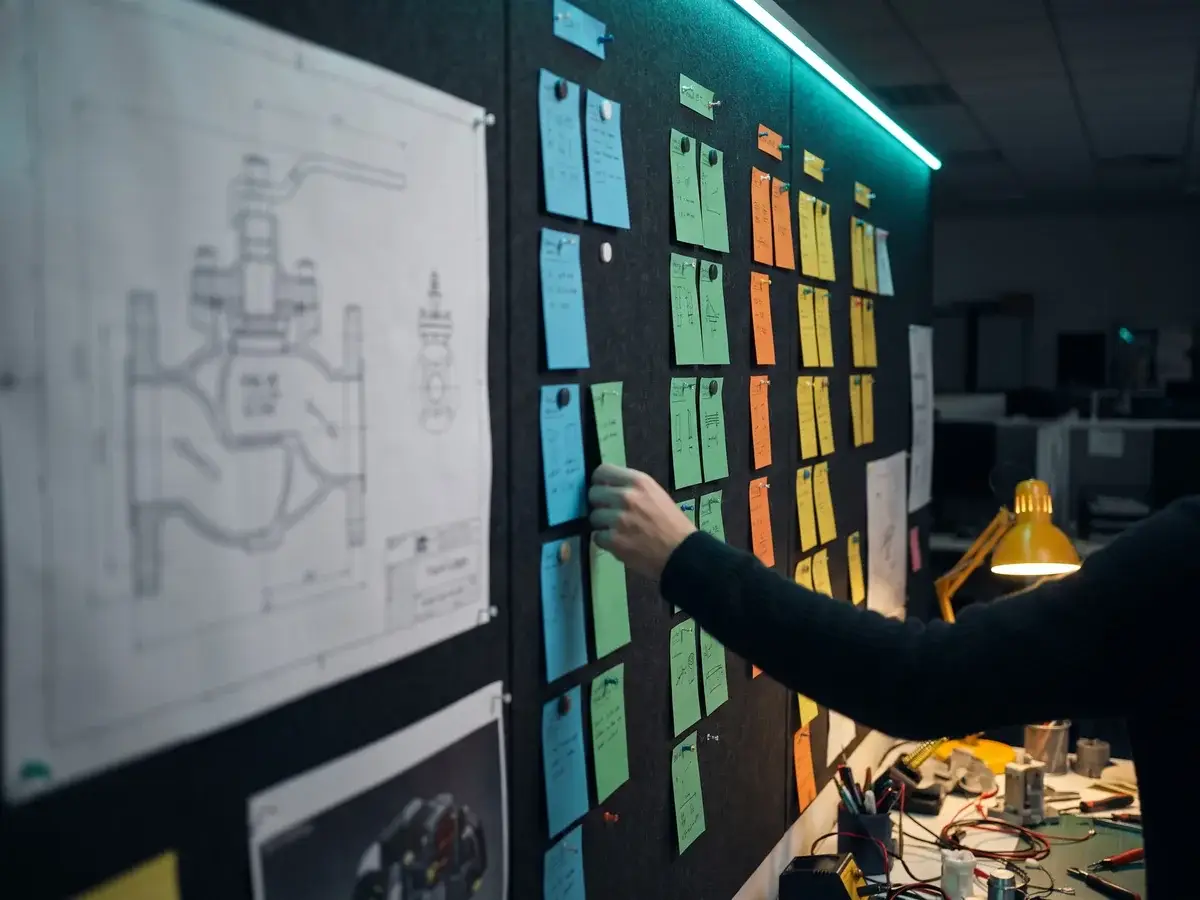
Agile project management on a hardware program: a team plans a design sprint inside a stage, beside a pinned CAD drawing

One design moves through all seven topics. Simulation checks it, best practices shape it, and methodology proves the model matches the part. Manufacturing and sustainability set its cost and footprint. Leadership and project management keep each decision on time.

Start Here

Start Here With Our Core Stage Gate Planning Article

Read One Core Article First, Then Go Deeper On Each Topic

How We Work

How Our Engineers Run Stage Gate Product Programs

Project Management Steps We Use On Client Work, And You Can Too

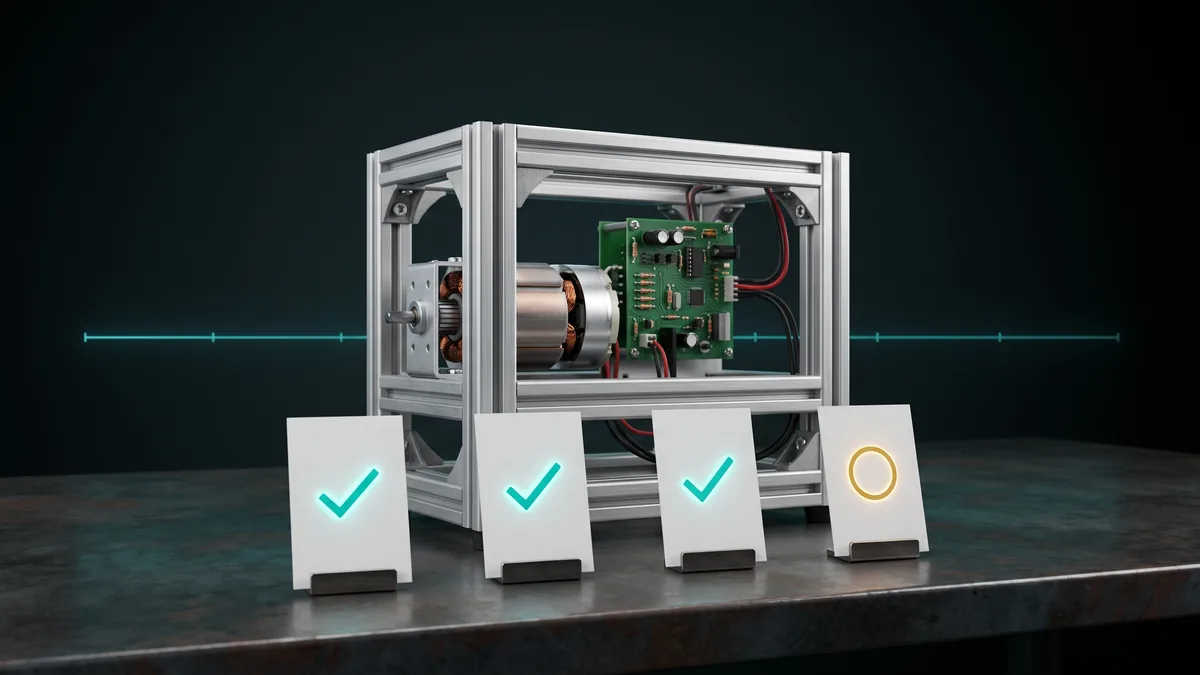
Prototype on a workbench with four stage gate cards, three checked and one open, showing how a stage gate holds a program
01

Set What Each Gate Proves

Each stage gate gets written criteria before the stage starts. They say what must be proven, by which analysis or test, and how good the evidence has to be to pass.

02

Plan Work Before Each Gate

Analysis, DFMA reviews, and tests are scheduled to finish before the gate that needs them. The gate meeting then reviews evidence instead of waiting for it.

03

Prototype To Confirm, Not Find

Prototypes are planned to confirm what the analysis predicted, not to discover problems. Fewer surprises at a prototype mean fewer loops back to an earlier stage.

04

Hold The Gate Until It Is Met

A gate that passes with open issues costs twice later. Open items get an owner and a date. The program moves on only when the criteria are met.

Standards behind these articles: ISO 21500 (project, programme and portfolio management), the PMI PMBOK Guide, and NASA’s program and project life cycle.

Latest Articles

Latest Stage Gate And Project Management Articles

Agile Project Management, Gates, And Prototypes, In Practice

Project Management Articles

Product Development Articles

Prototyping & Testing Articles

Our first project management articles publish soon. Sign up below to get each one by email.
Engineering Insights

Get New Stage Gate And Project Articles By Email

Real Engineering From Our Team, Sent When A New Article Publishes

  • New articles when they publish
  • Written by our engineers
  • Unsubscribe in one click
Put It To Work

Program Services Behind Our Stage Gate Insights

When You Need The Design, Not The Article, Our Engineers Deliver It

Project Management

Gates, schedules, and decisions run by engineers, so the design stays on scope and decisions happen on time.

Decisions made on time.

Covers

Gates

Schedule

Decisions

See Project Management

Product Development

From concept to launch through stage gates you approve, with simulation and testing where the design needs it.

From concept to launch.

Covers

Concept

Stage-Gate

Testing

Explore Product Dev

Prototyping & Testing

Plan prototypes to confirm what simulation predicted, not to discover the problems it would have found.

Build only to confirm.

Covers

Prototypes

Testing

Validation

Explore Prototypes
Where It Applies

Stage Gate Programs Across The Industries We Serve

See How The Same Methods Apply To Your Industry's Hardest Problems

Aerospace & Defense

Single-point design failures ground fleets and trigger costly program reviews.

Find it before flight.

Applications

Flight FEA

Buckling

CFD

Explore Aerospace

Automotive

Late validation cycles delay vehicle launches across model-year gates.

Ready for the next gate.

Applications

EV Thermal

Crash

NVH

Explore Automotive

Pharma & Chemical

Untested mixing dead zones trigger FDA findings and costly batch rework.

Validate before building.

Applications

Reactor CFD

Mixing

GMP

Explore Pharma

EtO Sterilization

New sterilizer chambers take long lead times and must fit validated processes.

Engineer the chamber.

Applications

Chambers

ASME VIII

Vacuum

Explore EtO Sterilization
Free Checklist

Get The Stage Gate Criteria Checklist For Hardware

The Criteria To Set For Each Stage Gate On A Hardware Program

FAQ

Stage Gate And Project Questions Readers Ask Us

Short Answers On Our Articles, Our Engineers, And Getting Help

Who Writes These Articles, And Where Do The Methods Come From?

Engineers write every stage gate article on this page. The people who run PPS projects write about problems they see on real programs. They cover what went wrong, how they checked it, and what they would do next time. The articles teach methods, not sales pitches.

Advice from people who have never run a program is easy to find and hard to trust. So each post names its author and shows when it was last updated. Nick Duff, Co-Founder & Chairman, CEO, is an aerospace stress engineer on flight-critical aerospace and defense programs. Tom Cushing, Co-Founder & CTO, is a licensed Professional Engineer (PE).

Tom leads the tools, methods, and design QC our engineers use from assessment to delivery. PPS engineers run FEA, CFD, CAD, and DFMA in-house. Every design goes through that QC, and the articles follow the same methods. You can read their full backgrounds on our About page. If something in an article does not match your own project, tell us and we will check. We reply within one business day.

Can I Use The Methods In These Articles On My Own Programs?

Yes. Each stage gate article explains the method step by step, so you can apply it to your own program today. It covers what to set up, what to check, and what a good result looks like. We write for practicing engineers and the managers who lead them.

There is a limit, though. An article cannot see your loads, materials, schedule, or drawings. The same method can mislead you when the inputs are off. When a design decision, a supplier dispute, or a safety margin depends on the answer, get a second look. NASA's guidance on technical reviews also sets clear entry and success criteria for each one.

Use the articles to set up gates, rescue a schedule, or train a new project lead. Bring the hard calls to us. That is what our free assessment is for. You send the data, and an engineer who can see the whole problem reviews your project scope. You get a roadmap that shows what we would check, change, or test next, and why.

What should a stage gate process for hardware products prove at each gate?

In engineering program risk management, each stage gate proves the next stage is worth paying for. That means deciding the evidence before the gate, not at it. Early gates prove the problem and the concept: requirements written, main risks named, and simple analysis showing the concept can meet them.

A gate that passes with open issues costs twice later. NASA's life cycle guidance puts a key decision point between phases, where one authority judges readiness. Many commercial programs let gates pass on hope and a tight date. Then a problem the gate should have caught turns up at prototype, and the program loops back a full stage.

Middle gates prove the design: detailed analysis on critical parts, a DFMA review, and a prototype plan that confirms the analysis. Late gates prove the product can be built and sold: test results, supplier quotes, and a launch plan. If a gate keeps failing on the same item, that item needed work earlier. Send us the plan and the open items. We reply within one business day.

Program stuck at a gate? Get a free assessment and a roadmap.

A Gate That Passes With Open Issues Costs You Twice Later

Turn Stage Gate Plans Into Designs You Can Build

Get The Lowest Total-Cost Design, Plus The Data And IP, From One Team

Send your CAD, data, and goals. We review your project scope in a free assessment and reply within one business day with next steps.

SDVOSB Certified
VOSB Certified
CAGE 8ZK73
NAICS 541330

On-site assessments that require travel are quoted separately.