
The challenge
Demand grows, but new chambers take long lead times and must fit validated processes.
Review: ISO 11135
→
What changes
Unlike ethylene oxide sterilization equipment manufacturers with a catalog, we size chambers, vaporizers, and vacuum pumps to your cycles.
The challenge
Chambers are pressure vessels. A design that misses ASME Section VIII stalls at review.
Review: ASME VIII
→
What changes
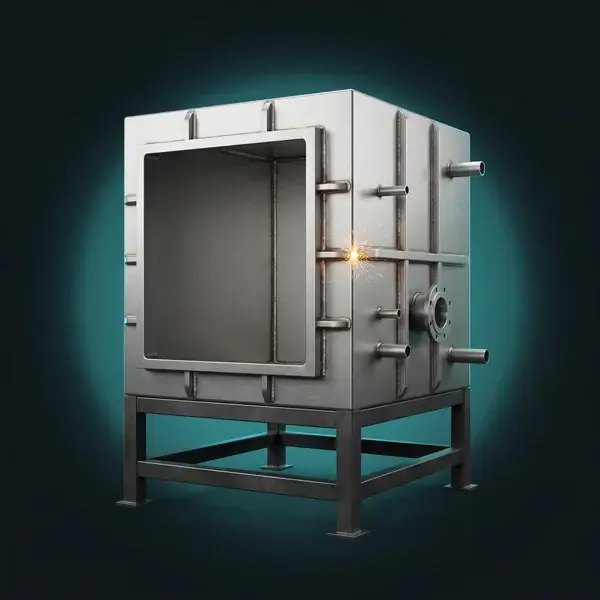
Wall, door, and nozzle designs are checked in FEA, with the calculations your inspector needs.
The challenge
Uneven EtO and humidity in the load lengthen cycles and risk failed runs.
Review: ISO 11135
→
What changes
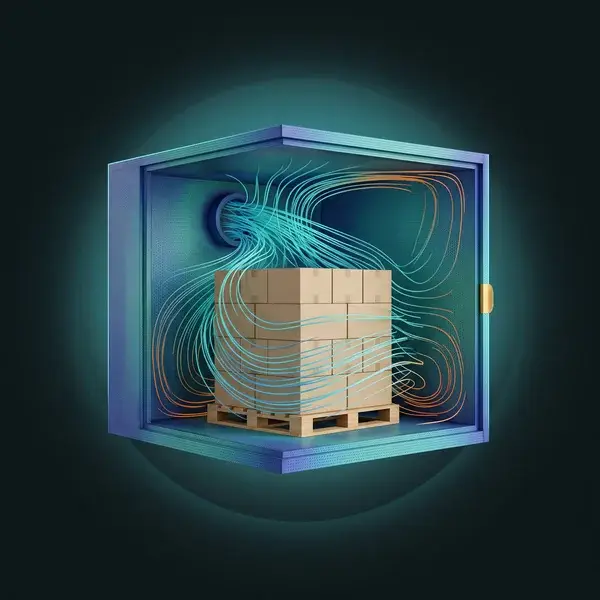
Gas and heat flow in the chamber are modeled in CFD, so the design reaches the whole load.
The challenge
Chamber, vaporizer, pump, and controls vendors each own one piece, and the gaps land on you.
→
What changes
PPS manages design, fabrication, and install, with partner fabricators or yours.
About half of all sterile medical devices in the U.S. are sterilized with ethylene oxide, according to the FDA.
01
A chamber, vaporizer, and vacuum system design sized to your cycles, with the ASME VIII calculations behind it.
02
CFD and FEA results you review and approve at each gate, before anything moves to fabrication.
03
You own the IP by default. When an OEM or partner manufacturer is involved, the contract spells out who owns what.
04
If we missed it in our QC, we fix it. If your supplier can't make the part within three years, or supply dries up, we fix that too.
You send
What we need to start
Facility layout: rooms, utilities, and exhaust routing
Cycle data: EtO charge, loads, and cycles per day
Current equipment and any history of failed runs
Targets: capacity, footprint, and schedule
Fabricators you prefer, if you have them
→
You get
What you hold at the end
Equipment design: CAD and drawings for fabrication
ASME VIII calculations for chambers and vessels
CFD and FEA results you reviewed and approved
Fabrication package, ready to quote
Project management through build and install
We price to the value we deliver, not the hours we log. If the value isn't there for you, we'll say so in the assessment.
Bring your own manufacturer, or work with our partner network. We take the designs we engineer as far as you need.
Design chambers and vessels to ASME Section VIII, with FEA on walls, doors, and nozzles before fabrication.
Calcs ready to review.
Used For
Chambers
ASME VIII
Doors
Engineer vaporizers, vacuum pump skids, and chamber hardware that fit your cycles, footprint, and utilities.
Sized to your cycles.
Used For
Vaporizers
Vacuum Skids
Hardware
Model EtO, steam, and heat flow inside the chamber, so gas and humidity reach every part of the load.
Reach the whole load.
Used For
Gas Flow
Humidity
Heat-Up
One team manages design, fabrication, and install, with partner shops or yours, on a schedule you approve.
One team, one schedule.
Used For
Fabrication
Install
Schedule
Standard Controls
Most EtO emissions reduction today works by destroying the gas. Acid scrubbers and catalytic oxidizers handle EtO sterilizer emissions compliance that way. A facility pays for the sterilant, then pays again to destroy it.
What We Are Developing
PPS holds exclusive rights to two granted U.S. patents for ethylene oxide recovery. Our granted patents describe a process designed to recover and recycle over 99.5% of the ethylene oxide in the gas stream. That is a design figure, not a measured result. We have modeled and patented the recovery process and built a bench-scale model. It is a process still in development, not a product.
US 10,738,020 B2 · Granted patent
US 10,815,209 B1 · Granted patent
Bayer · Letter of support
The engineers who invented these patents design your ethylene oxide sterilization chambers, vaporizers, and vacuum systems. The recovery process is not part of the equipment we engineer today.
“Pure Prime’s EO recycling process aligns with Bayer’s commitment to sustainability.” Todd Powell, Director of Sterility Assurance, Bayer (letter of support)



Process design, mixing, and reactor CFD for GMP plants, where one validated change affects every batch.
Validate before building.
Applications
GMP Plants
Mixing
Reactors
Dust collection and emission control designed to your EPA permit, without oversizing fans and ducts.
Right-size your controls.
Applications
Dust Control
Scrubbers
Permits
Aerospace to data centers: see how one engineering team solves hard constraints across ten industries.
Find the one like yours.
Industries
Aerospace
Mining
Data Centers
Fixed scope for one project. A lower-risk place to start when you want to see our work on your data.
Start with one project.
Fits When
One Project
Fixed Scope
From $35K
Scheduled monthly engineering for recurring needs: drawing updates, ASME calcs, or FEA for each sale.
Work on a set schedule.
Fits When
Monthly
Recurring
From $15K/mo
A dedicated PPS team working your program daily, built for long, multi-year development and testing.
Your program, every day.
Fits When
Daily Work
Multi-Year
From $800K/yr
Gold · One project: upgrade your vacuum pumps, add a sterilizer, or replace a vaporizer.
Platinum · Ongoing work: engineering support while you bring up a new sterilization process.
Diamond · A new facility: equipment, project management, and start-up support, end to end.
FEA, CFD, CAD, DFMA, and testing under one roof. Engineering is a team sport, and you get the whole team.
One team, every skill.
Under One Roof
FEA
CFD
CAD
DFMA
Testing
Veteran-owned SDVOSB status gives defense and federal buyers a set-aside path to proven engineering.
Verify our SDVOSB status.
Credentials
SDVOSB
VOSB
CAGE 8ZK73
NAICS 541330
Missed something in our QC? We fix it. Supplier can't make the part within three years? We fix that too.
Support for the long run.
We Fix
Our QC Misses
Supplier Gaps
Supply Chain
We price to the value we deliver, not hours logged. You buy a design that works, not more iterations.
Pay for the result only.
Collections
Gold
Platinum
Diamond
What EtO sterilization equipment does PPS engineer?
If you are comparing ethylene oxide sterilization equipment manufacturers, start with what each one engineers. PPS engineers the core of a sterilizer line: the chambers, the vaporizers, and the vacuum systems. Each one has to match your cycles, your loads, and the codes your chambers must meet before they run. About half of all sterile medical devices in the U.S. are sterilized with ethylene oxide, according to the FDA. So a failed run or a stalled chamber hurts both your schedule and device supply. A chamber that misses ASME Section VIII stalls at review. Catalog vaporizers and pumps may not fit your cycles or your utilities.
Chambers are pressure vessels, so we design them to ASME Section VIII and check walls, doors, and nozzles in FEA. Vaporizers and vacuum systems are sized to your cycles, loads, and utilities. CFD models gas, steam, and heat flow, so EtO and humidity reach the whole load. You get CAD, drawings, and calculations your inspector can review, plus a fabrication package ready to quote by any qualified shop.
Who builds the equipment, and who manages the project?
When you compare ethylene oxide sterilization equipment manufacturers, ask who builds. With PPS, the build is your choice. PPS can source fabrication through the partner shops we work with, or your own fabricator can build to our design. Either way, one PPS team manages the project from design to install. When chamber, vaporizer, pump, and controls vendors each own one piece, the gaps land on you. Schedules slip while each party defends its scope, and nobody owns the whole line. The chamber must also be built by a fabricator that holds the right ASME certification for the work, so the choice of shop matters.
We run the schedule, track suppliers, answer fabricator questions, and review changes before they reach the shop floor. Controls and electrical work come through our partner network, coordinated with your team. You approve the design at each gate. Installation fits around your running plant and your planned shutdown windows. After start-up, we stay on for changes and questions. If we missed something in our QC, we fix it.
Can PPS work with our OEM or manufacturer?
Yes. Partnerships like this are normal between ethylene oxide sterilization equipment manufacturers and the facilities they serve. We work in one of three models. In OEM Partner, we act as your engineering team. In Operator-Led, we design the equipment for your facility and work with your builder.
When design, build, and test sit with different companies, problems pass back and forth. The builder works from an old drawing, and each party defends its own scope. The Department of Defense's IPPD Handbook organizes programs around integrated teams for this reason. In a Joint Program, the facility and its OEM work with us in one loop.
We engineer the design and coordinate the builder in one loop. Bring your own manufacturer, or work with our partner network of fabricators, machine shops, and test labs. You decide how far we take the design, up to the start of production. Your shutdown windows set the schedule. NDAs cover every party. You own the IP by default, and you decide whether your OEM may reuse the design.
What do I send to start an EtO equipment project?
To start an ethylene oxide sterilization equipment project, send what you have. That usually means your facility layout, with rooms, utilities, and exhaust routing, plus your cycle data: EtO charge, load sizes, and cycles per day. Add your current chambers, vaporizers, and vacuum pumps, and any history of failed runs. Tell us your targets for capacity, footprint, and schedule, and any fabricators you prefer. Missing data is the most common reason equipment projects stall: a design built on guessed inputs gives a guessed answer. That is why we don't start until every data set is in.
Once it is, the first step is a free assessment of your project scope. We confirm what the work can and can't answer, and tell you what is still missing. Then we send a roadmap proposal with scope, targets, and approval gates. Every project is scoped on its own, so the roadmap sets the schedule, not a stock promise. NDAs are available before you share any files. For material data gaps, NIST material measurement data is a good first stop.
Who owns the design and models when the work is done?
You own the design, the drawings, and the models from your ethylene oxide sterilization equipment project by default, as set in the contract. When an OEM or partner manufacturer is involved, the contract spells out who owns what. Some firms keep the models, or license them back to you, so every later change sends you back to them. That locks your product to one vendor and makes design reviews harder, because your team can't open the evidence behind the decisions. You receive the native CAD, the drawings, the simulation model files, and the documented results.
Your engineers can check the work, rerun a load case, or hand the package to a supplier or customer. We sign mutual NDAs before any of your data is shared, and your files stay in our controlled project folders while we work. If your program has export-control or customer data rules, tell us at the start and we will set up the data handling to match them. For defense programs, the State Department ITAR guidance sets the rules we follow.
What happens if a prototype fails in test?
If a prototype fails in test, we find out why and fix the design. Hard engineering carries unknowns: real loads, material lots, and assembly effects never match a model perfectly. With ethylene oxide sterilization equipment from PPS, you approve the data at each gate. A test result is then checked against predictions you have already seen, not a black box. A failure in test is data. It shows which assumption was wrong, whether a load, a material property, or a boundary condition, and that data improves the model and the design.
When testing is in scope, we plan the test to confirm the margins that matter most. We correlate the model to the results, following ASME verification and validation practice. If the miss was ours, because something slipped through our QC review, we fix it. If the test uncovers a condition nobody knew about, we scope the change with you and update the roadmap. Either way, you get a clear answer and a path to a design that holds, without another blind loop.
How is an EtO equipment project priced?
We price every ethylene oxide sterilization equipment engagement to the value it delivers, not the hours we log. Hourly billing rewards extra iterations, so the cheapest quote often becomes the most expensive project once tooling, rework, and field failures show up. Our incentive is to get the design right the first time. We engage by fit, not as a ladder. Gold (from $35K): you have one project and need help with it. Platinum (from $15K/mo): you have recurring work at a steady rhythm. Diamond (from $800K/yr): you have a long development program, often multi-year.
Gold is never required, and some clients start at Platinum or Diamond. These are starting points, not quotes; your roadmap sets the price. We price to the value we deliver, not the hours we log. If the value isn't there for you, we'll say so in the assessment. Our engineering consultant pricing page explains how each collection works in more detail.