Home › Engineering Consulting Services › Digital Twin Services

Equipment You Can't See Inside Fails On Its Own Schedule

Digital Twin Services That Show How Your Equipment Runs And Fails

Physics-based models tied to your operating data, made to test changes first

Send your models and plant data. Get a roadmap to a working twin.

Is This Your Constraint?

When Your Operation Needs Digital Twin Services

Industry 4.0 Consulting That Starts With Physics, Not Dashboards

Sensors and dashboards show what happened. They can't show why, or what will happen if you change a setting. Digital twin services create a physics-based model of your equipment or process. The model is tied to your operating data, so you can test changes, loads, and failures on it first.

Without that model, teams fall back on one of two habits. Some run equipment on the safe side and leave capacity unused. Others learn the limits the hard way: a trip, a failure, or a change that didn't work. Every one of those lessons costs downtime.

PPS engineers develop digital twins from FEA, CFD, and system models, alongside our engineering consulting services, multiphysics simulation services, and CAD design services. You get a model you can trust for decisions, not just a picture of your plant.

✓

Equipment run below capacity to stay safe

Nobody can prove how far it can go.

✓

Failures that arrive without warning

Data shows the trip, not the cause, so nobody can predict equipment failure before it happens.

✓

Process changes tried live on the line

Every trial risks product and downtime.

✓

Sensor data nobody turns into decisions

Dashboards fill up while questions stay open.

✓

Aging equipment with unknown remaining life

Repair or replace becomes a guess.

✓

Upgrades sized without a model

New equipment may not fix the real limit.

51%
Fewer Prototypes
Source: PPS Innovation Edge white paper
34%
Less Rework
Source: PPS Innovation Edge white paper
37%
Shorter Test Phase
Source: PPS Innovation Edge white paper
Where Your Total Cost Hides

How Digital Twin Services Lower Your Operating Costs

Industry 4.0 Consulting Turns Plant Data Into Clear Decisions

Cost you carry

Decision it lets you make

Result

Unit cost

Material & weight

Decision

Model the real limits of your equipment, then run closer to them with margins you can document.

→

Result

More output from the equipment you already own.

Development

Prototypes & testing

Decision

Test process and setting changes on the model first, then confirm them on the real equipment.

→

Result

Fewer trial runs and less scrap.

Tooling

Rework & redesign

Decision

Find the failure mode in the model and fix the design or operation before it causes downtime.

→

Result

Fewer unplanned stops and repairs.

After launch

Field failures & warranty

Decision

Track remaining life against real loads, and plan repairs and upgrades on evidence.

→

Result

Maintenance spend you can defend in review.

What You Get

What You Get From Digital Twin Services With PPS

A Design Solution, Approved Data, Your IP, And Support After Delivery

01

The Design You Needed

A design that meets your loads at the lowest total cost, delivered as production-ready CAD and drawings

02

The Data Behind It

FEA results and margins you review and approve at each gate, before anything moves to prototyping.

03

The IP Is Yours

You own the IP by default, set in your contract.

04

Support After Delivery

If we missed it in our QC, we fix it. If your supplier can't make the part within three years, or supply dries up, we fix that too.

You send

What we need to start

CAD, native or STEP

Loads and operating conditions, or how the part is used

Material specs or test data, if you have it

Targets: weight, cost, life, or code

Failure history, if a part already failed

→

You get

What you hold at the end

The optimized design: CAD and drawings ready for production

Models and results you reviewed and approved

Documented margins or code compliance

Test correlation, when testing is in scope: a partner lab or yours

A roadmap for what comes next, and a team that stays with you

We price to the value we deliver, not the hours we log. If the value isn't there for you, we'll say so in the assessment.

How We Work · Service

How Our Digital Twin Services Get You To A Working Model

Digital Twin For Industrial Equipment, Calibrated To Your Plant Data

01
Assess
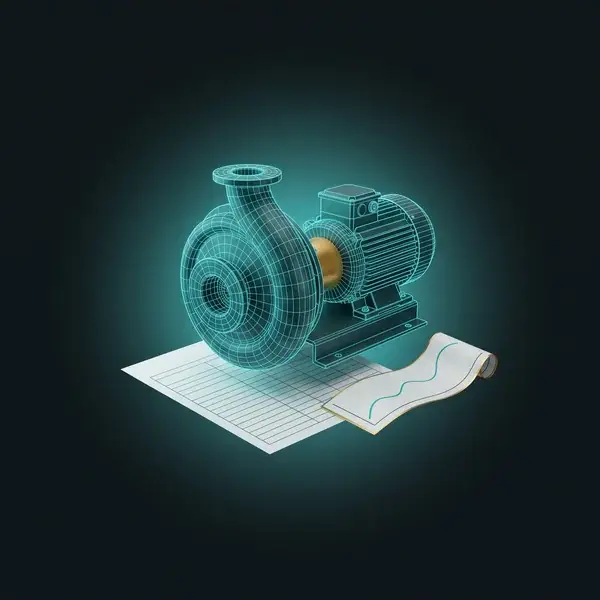
Teal wireframe of a pump over a data sheet and a strip of trend paper: the operating data digital twin services start from

We review your project scope, data, and questions, and screen what the twin must answer. You get: a free assessment.

02
Roadmap
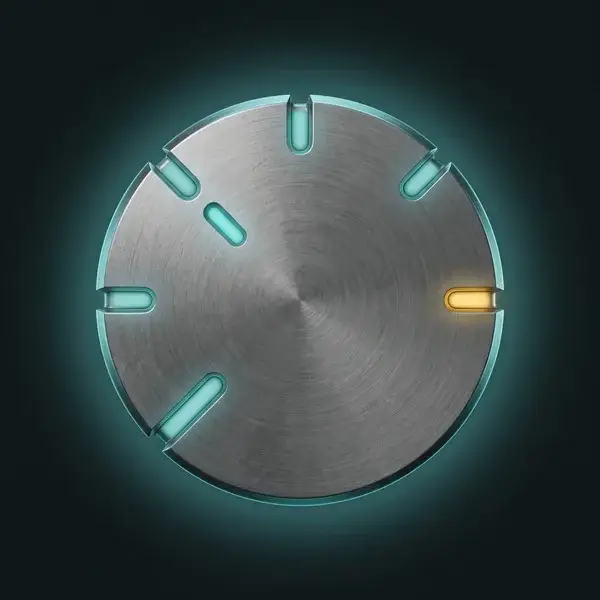
Selector dial with four teal-lit detents and a gold stop: the questions, scope, and gates of a digital twin services plan

Scope, targets, and gates, from where you are to where you need to be.

03
Engineer
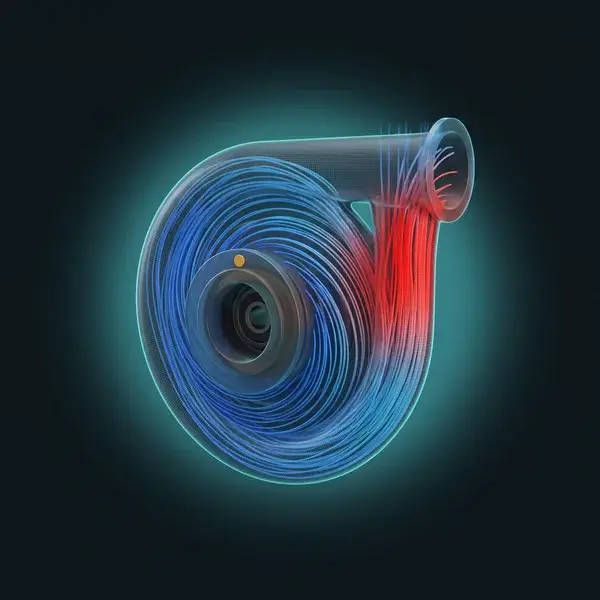
Digital twin services physics model of a pump: flow streamlines through its volute and red stress at the discharge nozzle

Physics models made and calibrated to your data, with testing when needed. You get: data to approve.

04
Deliver
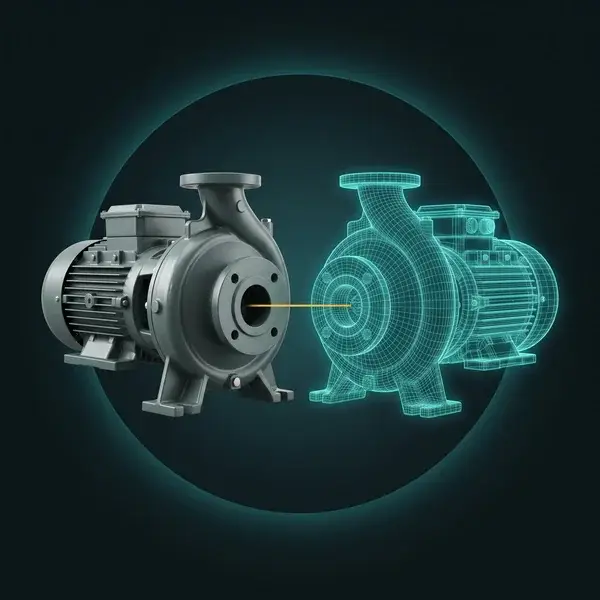
Real pump beside its matching teal mesh twin, linked by a gold line: the calibrated model that digital twin services deliver

The design, drawings, and models, second-checked in our QMS.

05
Support
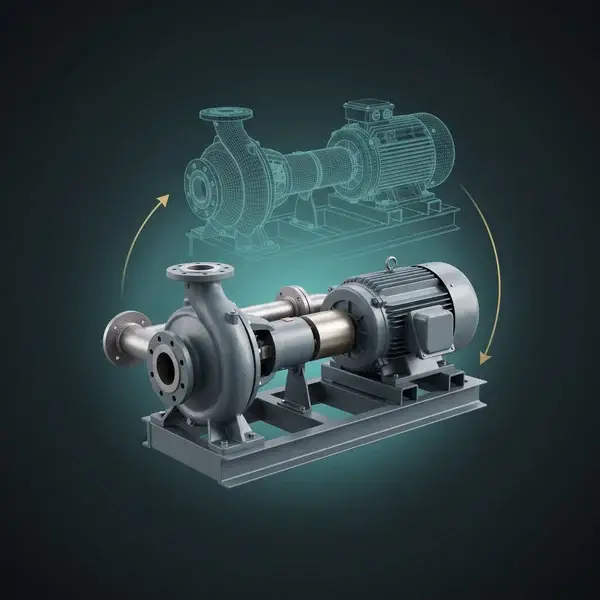
Pump on its skid with its teal twin above and a gold arc between them: digital twin services that update as equipment changes

We stand behind the design through production and supply issues.

PPS engineers combine FEA, CFD, and system models into one twin. Physics sets the behavior, and your data calibrates it. Every result is checked before you rely on it. So the decisions you make on the model hold on the real equipment.

Dashboard-Only Vendor

Collect Data, Hope

Outdated
  1. Sensors And Charts

    What happened, not why

  2. “Passes”

    Or run below limits to be safe

  3. Try It Live

    Changes tested on the real line

  4. Trip Or Failure Rework

    The limit shows up in production

  5. Repair

    Downtime, parts, and lost output

You fund every loop
Every loop costs a prototype and a test
Pure Prime

Model, Then Decide

Recommended
  1. Screen

    Which questions the twin must answer

  2. Physics Twin

    FEA, CFD, and system models

  3. Optimize Our loop, not yours

    Calibrated to your data

  4. QMS Check Passed QC

    Second engineer verifies the model

  5. Trusted Model

    Decide, then confirm

Fewer trial runs and trips
Test on the model, not the line

Every trial run on the real line costs output. Get a free roadmap.

Get Your Free Roadmap
Industry Applications

Digital Twin Services Results In Your Industry

Power Generation Equipment To Mining And Cement Plant Assets

Power Generation Assets

Turbines, boilers, and plant support equipment modeled to run closer to limits with documented margin.

Fewer forced outages.

Applications

Turbines

Boilers

Remaining Life

Capacity

See Power Gen Work

Mining Equipment Fleets

Crushers, screens, and haul equipment modeled against real duty to plan repairs before the failures do.

Stop costly downtime.

Applications

Crushers

Screens

Fatigue

Duty Cycles

See Mining Results

Cement Plant Equipment

Kilns, mills, and coolers modeled with process data so changes are tested before they reach the plant.

Fewer surprise stops.

Applications

Kilns

Mills

Coolers

Process Data

Explore Cement Work

Data Center Facilities

Cooling and power systems modeled so capacity changes and failures are tested before they ever go live.

Run cool at full load.

Applications

Cooling

Capacity

Failover

Airflow

See Data Center Work
Why PPS

Why Teams Choose PPS For Digital Twin Services

Industry 4.0 Consulting From Engineers Who Stand Behind It

A Team, Not One Hire

FEA, CFD, CAD, DFMA, and testing under one roof. Engineering is a team sport, and you get the whole team.

One team, every skill.

Under One Roof

FEA

CFD

CAD

DFMA

Testing

Meet Our Engineers

SDVOSB Set-Aside Ready

Veteran-owned SDVOSB status gives defense and federal buyers a set-aside path to proven engineering.

Verify our SDVOSB status.

Credentials

SDVOSB

VOSB

CAGE 8ZK73

NAICS 541330

Verify SDVOSB Status

We Stand Behind It

Missed something in our QC? We fix it. Supplier can't make the part within three years? We fix that too.

Support for the long run.

We Fix

Our QC Misses

Supplier Gaps

Supply Chain

See How Clients Stay

Solutions, Not Hours

We price to the value we deliver, not hours logged. You buy a design that works, not more iterations.

Pay for the result only.

Collections

Gold

Platinum

Diamond

View Pricing Plans
FAQ

Digital Twin Services Questions Engineers Ask First

Straight Answers On Scope, Data, IP, And What Happens If A Test Fails

What is a digital twin, and do I need one?

A Digital Twin Is A Physics Model Tied To Your Real Data

A digital twin is a model of your equipment or process that behaves like the real thing. Our digital twin services create twins from physics, calibrated to your operating data. They answer questions. How far can a machine be pushed? What will a change do? How much life is left? A dashboard shows what happened, not why, and not what happens next. A National Academies report, Foundational Research Gaps and Future Directions for Digital Twins, describes a twin as a model updated through two-way data flows. It also stresses verification, validation, and uncertainty checks. A twin nobody has checked can mislead you faster than no twin at all.

You need one when those questions cost you money. Watch for equipment run below capacity to stay safe, failures that arrive without warning, or changes tested live on the line. Many twins start small, on one critical machine, and grow once they prove their value. If simple monitoring answers your question, we say so in the free assessment. That keeps your spend on the questions that matter.

What data does a digital twin need?

CAD, Operating History, And Clear Questions Are Enough To Start

Our digital twin services start with three things. First, the geometry: CAD or drawings of the equipment. Second, operating data: sensor history, setpoints, and records of trips or failures. Third, a clear question the twin must answer. Maintenance records add the history of what was repaired. Data quality matters more than quantity. A year of reliable load and temperature data is worth more than a decade of unlabeled readings. That is where much industry 4.0 consulting stalls. NIST's MEP program lists sensors, data analytics, and modeling and simulation as parts of Industry 4.0. Sensors alone, without a model, rarely answer the engineering question.

If data is missing, the free assessment tells you what to add and where, often a few sensors in the right places. We model the physics in FEA, CFD, or system models and calibrate them against your history. Then we document how well the model matches the data. You decide when it is trusted enough to use. For power plants, our power generation engineering work uses the same approach.

What do you need from us to start?

Send Your Data And Targets; We Draft The Roadmap From There

To start digital twin services with PPS, send what you have, in any format you use. That usually means CAD or drawings of the equipment, sensor history, setpoints, and event logs. Add maintenance records, your targets, and the questions the twin must answer. Missing data is the most common reason engineering projects stall. A model built on guessed inputs gives a guessed answer, and the guess shows up later as bad decisions. That is why we don't start the work until every data set is in. For gaps in material data, NIST material measurement data is a good first stop for test values.

Once your data is in, the first step is a free assessment of your project scope and data. We confirm what the work can and can't answer, and tell you what is still missing. Then we send a roadmap proposal with scope, targets, and approval gates. Every project is scoped on its own, so the roadmap sets the schedule, not a stock promise. NDAs are available before you share files.

Who owns the design and the models?

The Design And Models Are Yours By Default, Set In Your Contract

You own the IP from your digital twin services project by default, as set in your contract. That covers the models, the calibration, and the results. Some firms keep the models or license them back to you for a fee, so every later change sends you back to them. That locks your plant to one vendor. It also makes reviews harder, because your team can't open the evidence behind each decision. Export rules add real risk. On defense work, the State Department's ITAR rules control who may see technical data, and loose file handling can break them. Your data deserves the same care as your equipment.

At delivery you receive the model files, the inputs, the calibration record, and the documented results. Your engineers can check the work, rerun a case, or hand the package to another team. We sign mutual NDAs before any data is shared. Your files stay in controlled project folders. If export-control or customer data rules apply, we set up data handling to match. Nothing is held back.

What happens if the twin doesn't match the real equipment?

If We Missed It In Our QC, We Fix It; Field Data Improves It

If the twin and the real equipment disagree, we find out why and fix the model with you. With digital twin services from PPS, you approve the data at each gate. So each field result is checked against predictions you have already seen, not a black box. Hard engineering carries unknowns on any project. Real operating conditions, material lots, and wear never match a model perfectly, however careful the work. A mismatch is data, not a failure: it shows which assumption was wrong and why. NASA's standard for models and simulations treats verification and validation as part of judging whether a model can be trusted.

When testing is in scope, we plan it to confirm the predictions that matter most to you. Then we correlate the model to the results. If the miss was ours, because something slipped through our QC review, we fix it. If the data uncovers a condition nobody knew about, we scope the change with you and update the roadmap. Either way, you get a clear path forward.

How are digital twin services priced?

Priced To The Value We Deliver, Never To The Hours We Log

We price digital twin services by the value of the result, not by the hour. Hourly billing rewards extra iterations, and you pay for each one. So the cheapest quote often becomes the most expensive project once rework, delays, and field failures show up. Federal buyers flag the same risk. FAR 16.601 says a time-and-materials contract gives the contractor no positive profit incentive for cost control or labor efficiency. Our incentive runs the other way: get the model right the first time. We engage by fit, not as a ladder. Gold is never required, and some clients start at Platinum or Diamond.

Gold (from $35K): you have one project and need help with it. Platinum (from $15K/mo): you have recurring work at a steady rhythm. Diamond (from $800K/yr): you have a long development program, often multi-year. These are starting points, not quotes; your roadmap sets the price. We price to the value we deliver, not the hours we log. If the value isn't there for you, we'll say so in the assessment.

Not sure a twin will pay off? Send your data. Get a free roadmap.

Free Project Scope Assessment. No Obligation. NDAs Available Now.

Get A Digital Twin Services Roadmap For Your Operation

Send Your Data. We Show The Path To The Lowest Total-Cost Design.

Send your drawings, operating data, and questions. We review your project scope in a free assessment and reply within one business day with next steps.

SDVOSB Certified
VOSB Certified
CAGE 8ZK73
NAICS 541330

On-site assessments that require travel are quoted separately.