
The problem
About half of all sterile medical devices in the U.S. are sterilized with ethylene oxide, according to the FDA. Heat- and moisture-sensitive devices, such as plastic parts and catheters, rely almost entirely on EtO sterilization (EPA, citing FDA, 2024). Today's EtO controls scrub or burn the spent gas, so it is used once and destroyed.
Sources: FDA; EPA, citing FDA, 2024; industry-reported.
The PPS approach
Our patented process is designed to capture EtO from sterilizer exhaust, separate it from air and moisture, and return it to the process. Spent sterilant becomes supply.
We have modeled and patented the recovery process and built a bench-scale model. The next step is a pilot unit tested at a partner's site on one of their research and development ethylene oxide sterilizers, then a first commercial installation. It is a process still in development.
Proof
US 10,738,020 B2
US 10,815,209 B1
Bayer letter of support
Public source · FDA, via EPA
20B+
Devices A Year
About half
Of Sterile Devices
More than 20 billion medical devices used in the U.S. every year are sterilized with EtO, about half of the devices that need sterilization (FDA, cited by EPA, 2024).
Public source · EPA, 2024
88
Operating Facilities
50
Parent Companies
EPA's 2024 analysis identified 88 EtO sterilization facilities operating in the U.S. Fifty parent companies own the facilities covered by the 2024 rule, and several own more than one (EPA, 2024).
Public source · EPA, 2024
$2.2B
U.S. Revenue, 2021
$24.6M
Per Facility
EPA's 2024 analysis estimated U.S. commercial EtO sterilization revenue at about $2.2 billion in 2021, roughly $24.6 million per facility (EPA, 2024).
Granted U.S. patent
A granted U.S. patent to recover ethylene oxide after sterilization, so it is reused rather than destroyed.
Granted, not pending.
Status
Granted
U.S.
EtO recovery
Granted U.S. patent
A second granted U.S. patent for ethylene oxide recovery, from the same co-inventors behind the PPS process.
Granted, not pending.
Status
Granted
U.S.
EtO recovery
Design figure
Our patents describe a process designed to recover and recycle over 99.5% of the EtO in the gas stream.
Partner sites wanted
Built with
Capture
Separate
Reuse
Design figure from the granted patents. The bench-scale model is built and not yet tested.
See Our EtO EquipmentPatent protection
PPS holds exclusive rights to two granted U.S. patents for ethylene oxide recovery. Eight granted patents in six countries: two in the U.S., two in Canada, and one each in the UK, Japan, Australia and South Africa.
Granted patents
US 10,738,020 B2
US 10,815,209 B1
UK GB2606910
Japan JP 7410302
Canada CA 3,159,301
Canada CA 3,229,924
Australia AU 2022268302
South Africa ZA 2022/05538
Patent pending in Europe.
The rule
EPA tightened its EtO sterilizer rule in 2024. In July 2025 a presidential proclamation gave covered sterilizers two more years to meet each deadline (Proclamation 10959, 2025). In March 2026 EPA proposed rolling back parts of the 2024 rule (EPA, 2026).
Sources: Proclamation 10959, 2025; EPA, 2026
The need
EPA concluded in 2024 that alternatives to EtO are unlikely to be available soon for highly EtO-dependent devices. Less than 5% of medical devices, mostly metal ones, are sterilized with steam (EPA, citing FDA, 2024).
The cost
EPA estimated the 2024 EtO sterilizer rule would need about $313 million in new control equipment across 90 U.S. facilities (EPA, 2024, 2021 dollars).
The switch cost
Moving one device to a new EtO sterilizer can take months of revalidation, and most EtO plants already run near full capacity (EPA, citing FDA, 2024).
Source: EPA, citing FDA, 2024

Co-Founder & Chairman, CEO
Inventor on both EtO recovery patents. Former aerospace stress engineer on flight-critical aerospace and defense programs. USMC veteran.
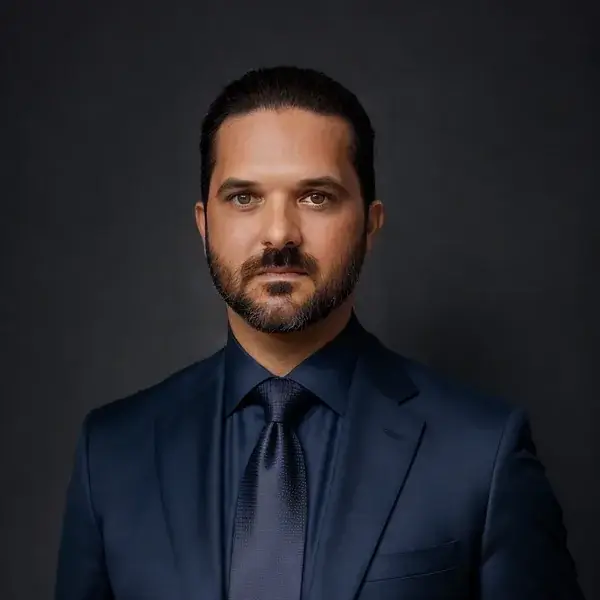
Co-Founder & CTO
Licensed Professional Engineer with an MEng and an MBA. Iraq veteran. Leads our engineering team as CTO.

Senior Fellow
Chemical engineer (MS) and co-inventor of both EtO recovery patents. Brings the process chemistry behind capture and reuse.
How Does Ethylene Oxide Recovery Work, And Where Does It Stand?
Sustainable companies to invest in solve a costly problem, and ours is lost sterilant. About half of all sterile medical devices in the U.S. are sterilized with ethylene oxide (EtO), according to the FDA. Yet the gas is used once and then thrown away.
Today's EtO controls scrub or burn the spent gas, so it is used once and destroyed. The plant pays for the gas, then pays again to destroy it. Exhaust gas heat recovery saves only the heat in a vent stream, not the sterilant. So every cycle starts with new gas bought in and ends with old gas destroyed.
Our patented process is designed to capture EtO from the sterilizer exhaust, separate it from air and moisture, and return it for reuse. Our granted patents describe a process designed to recover and recycle over 99.5% of the ethylene oxide in the gas stream. That is a design figure, not a test result. We have modeled and patented the recovery process and built a bench-scale model. Recovery is still in development.
Two Granted U.S. Patents Protect The Core Recovery Process
Sustainable companies to invest in need technology that others can't copy. PPS holds exclusive rights to two granted U.S. patents for ethylene oxide recovery: US 10,738,020 B2 and US 10,815,209 B1. Both are granted, not pending. Both cover recovering the gas for reuse.
Sterilization is a global supply chain. Many device makers run plants in more than one country. A patent in one country alone would leave other markets open. Today there are eight granted patents in six countries. Two are in the U.S., two in Canada, and one each in the UK, Japan, Australia and South Africa. Patent pending in Europe.
The inventors still lead the work. Our founder is an inventor on both U.S. patents, and our Senior Fellow, a chemical engineer, is a co-inventor of both. They know the process from first principles. That keeps the next stages honest: a pilot unit at a host site we are now seeking, then a first commercial installation. The investor pack lists each patent's claims and every filing's status, for your counsel.
Devices Still Depend On EtO, Whatever The Rules Say Next
Rules on EtO emissions have changed fast. Investors notice that, too. For sustainable companies to invest in, a shifting rule is a risk only if the need behind it can vanish. Here the rules moved three times in three years, so the question is a fair one.
EPA tightened its sterilizer rule in 2024. In July 2025, a presidential proclamation gave covered sterilizers two more years to meet each deadline. In March 2026, EPA proposed rolling back parts of the 2024 rule. A plan built on one version of the rule could be wrong within a single year. That is the real risk.
This need cannot vanish quickly. Heat- and moisture-sensitive devices, such as plastic parts and catheters, rely almost entirely on EtO. EPA concluded in 2024 that alternatives are unlikely to be available soon for those devices. Moving a device to a new sterilizer can take months of revalidation. Recovery helps under any rule. Gas that is captured and reused is gas that is not emitted and not bought again.
The Engineers Who Invented The Technology Lead The Company
Sustainable companies to invest in rise or fall on the team. Ours is led by the engineers who invented the technology. Nick Duff, our Co-Founder & Chairman, CEO, is an inventor on two U.S. patents for ethylene oxide recovery technology. He is a USMC veteran.
Taking a patented process to a working plant takes more than chemistry. It takes equipment design, analysis, and testing. Many early teams lack one. Nick began as an aerospace stress engineer on flight-critical aerospace and defense programs. Tom Cushing, Co-Founder & CTO, is a licensed Professional Engineer and an Iraq veteran with an MEng and an MBA.
Joseph Paganessi, our Senior Fellow, is a chemical engineer (MS) and co-inventor of PPS's two U.S. patents for ethylene oxide recovery. PPS is certified by the U.S. Small Business Administration as a Service-Disabled Veteran-Owned Small Business (SDVOSB). The same team runs our engineering work for clients in aerospace, defense, medical devices, and heavy industry. That daily work keeps our design and test skills sharp. The investor pack has full biographies.
Financials Are Shared Privately With Qualified Investors Only
We do not publish financial projections, returns, or valuations on this page. They go to qualified investors privately, in the investor pack, under a non-disclosure agreement (NDA). If you are comparing sustainable companies to invest in, start with facts: every figure here links to a public source.
To ask for the pack, use the form above. Tell us your name, your firm, and the type of investor you are. You confirm that you are an accredited investor, and we reply within one business day. We sign your NDA or send ours before we share anything. Our team walks you through the pack, including the open risks.
The pack covers the financial model, the test plan for the pilot unit, the use of funds, and the patent details. Investing in early-stage technology carries real risk, including the loss of all capital. Please review the pack with your own financial, legal, and tax advisors. Nothing on this page is an offer to sell securities. Any offering is made only to qualified investors through formal documents.