Home › Integrated Engineering Solutions › Reverse Engineering Services

A Part Nobody Can Make Again Can Stop Your Whole Operation

Reverse Engineering Services That Bring Legacy Parts Back Into Supply

New design packages for legacy parts and competitor teardowns, ready to quote

Get your legacy parts back in supply. Free assessment and roadmap.

Is This Your Problem?

Signs You Need Reverse Engineering Services For A Part

Lost Drawings, Dead Suppliers, And Other Signs A Part Is At Risk

A part your equipment needs has no drawings, or the shop that made it is gone. Each failure means a long search, a costly one-off, or a machine that sits idle. Many plants run on parts designed decades ago. The people who knew those designs have moved on. Our reverse engineering services measure the part, rebuild its CAD and drawings, and put it back into supply. We go past copying. We check the part in FEA against the real loads and fix it where it failed. The new part lasts longer, and more shops can quote it.

If nothing changes, every failure is a crisis. Downtime stretches while you hunt for a source. Prices rise because only one shop can help. The risk grows each year the part stays undocumented.

PPS reverse engineering goes past copying. We measure and model the part, check it in FEA against the real loads, and improve it where it failed, so the new part lasts longer and more shops can make it.

✓

No drawings

You need a replacement part with no drawings, and nobody can say how it was made.

✓

Supplier gone

The only shop that made it has closed or stopped.

✓

Rising one-off prices

Each replacement costs more and takes longer to arrive.

✓

Repeat failures

Copies fail the same way the original did.

✓

Downtime waits on parts

Machines sit idle while you search for a source.

✓

Knowledge left with people

The engineers who knew the design have retired.

The Usual Fix vs. Ours

Why Copied Parts Fail And Reverse Engineering Services Last

The Usual Copy Repeats The Old Flaws; Ours Checks And Fixes Them

Common approach

The usual fix: copy the old part

Outdated
  1. Measure and copy; old flaws come along

  2. Guess the material; wrong alloy, wrong life

  3. Skip the load check; no one knows the margin

  4. Use the same one shop; same single-source risk Rework

Problems repeat
Problems repeat as failures, downtime, one-offs
PPS approach

PPS: rebuild and improve

Recommended
  1. Measure and model; accurate CAD with real tolerances

  2. Identify it; tests confirm the alloy or polymer

  3. Check loads in FEA; fix where the original failed

  4. Design for more shops; standard processes

A part that lasts longer
With data for every change
Proof

Reverse Engineering Services Backed By PPS Project Data

Rework, Prototype, And Test-Phase Results From Our White Paper

34%
Less Rework
PPS Innovation Edge white paper
51%
Fewer Prototypes
Source: PPS Innovation Edge white paper
37%
Shorter Test Phase
PPS Innovation Edge white paper

The 34% less rework, 51% fewer prototypes, and 37% shorter test phase figures are from the PPS Innovation Edge white paper.

Public benchmark

A New Design Package Opens Supply

At least $22M

Saved through reverse engineering

Precedent

Reverse-engineered spare parts saved DLA at least $22M in lower prices, FY2015–18 (GAO, 2019).

What it means

An approved design package gives a part a second source, and competition lowers the price. We deliver that package for your legacy parts.

GAO-19-586, 2019

What Changes For You

How Reverse Engineering Services Lower Your Part Costs

Reverse Engineering Services: The Levers We Pull And Their Returns

Lever

Decision it lets you make

Result

Documentation

Parts with no drawings

Decision

Parts with no drawings are measured and modeled into CAD with tolerances.

→

Result

Parts any shop can quote. CAD design services →

Strength

Copies that fail the same way

Decision

FEA finds why the original failed, and the design fixes it.

→

Result

Longer life in service. FEA services →

Supply

Single-source parts

Decision

DFMA moves single-source parts to standard processes.

→

Result

Wider sourcing, lower prices. Value engineering services →

Upgrades

Old designs in new duty

Decision

Old designs are redesigned for today's loads and speeds.

→

Result

Machines that keep up. Machine design services →

What You Get

What You Get From PPS Reverse Engineering Services Work

A Lower-Cost Design, The Cost Model Behind It, Your IP, And Support

01

The Design You Needed

A documented part: CAD, drawings with tolerances, and fixes where the original failed, ready to quote.

02

The Data Behind It

Measurements and FEA results you review and approve at each gate, before any part is made.

03

The IP Is Yours

You own the IP by default. When an OEM or partner manufacturer is involved, the contract spells out who owns what.

04

Support After Delivery

If we missed it in our QC, we fix it. If your supplier can't make the part within three years, or supply dries up, we fix that too.

You send

What we need to start

The part, or several if they vary

Photos and any old drawings or notes

Service history: failures and how often

Mating parts or the assembly it fits

Targets: life, cost, or supply

→

You get

What you hold at the end

CAD and drawings with tolerances

Material identification and specification

FEA results you approved for loads and life

An improved design where the original failed

A roadmap for other at-risk parts, and a team that stays

We price to the value we deliver, not the hours we log. If the value isn't there for you, we'll say so in the assessment.

Bring your own manufacturer or lab, or work with our partner network. See how we partner by industry.

How We Work · Reverse Engineering

How Our Reverse Engineering Services Rebuild Legacy Parts

Obsolete Part Reverse Engineering, Approved By You At Each Gate

01
Assess
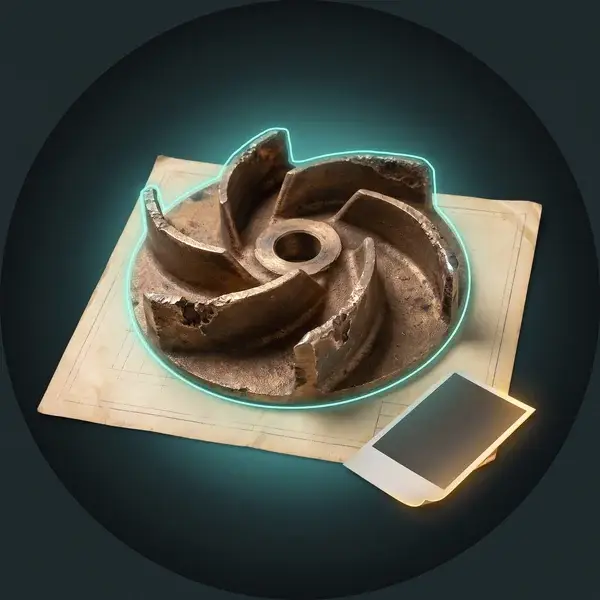
Worn bronze impeller on a faded drawing with a teal outline of its original shape: where reverse engineering services begin
We review your project scope, photos, and part history, and set who measures and who builds. You get: a free assessment.
02
Roadmap
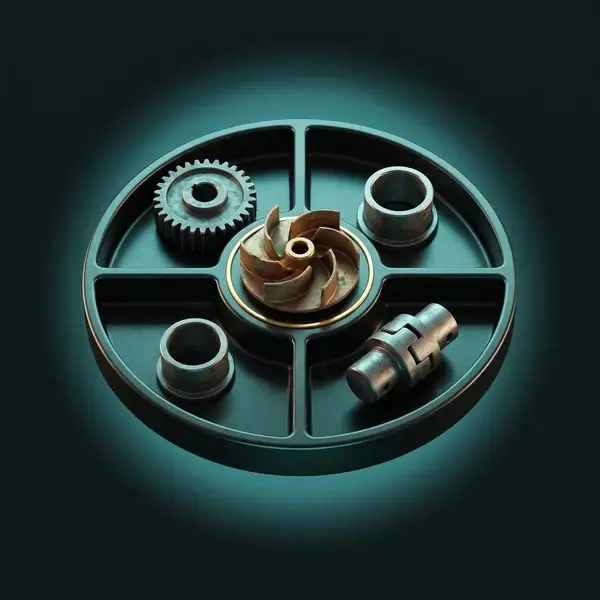
Tray of worn legacy parts with the impeller raised in a gold ring: parts ranked by risk and value in reverse engineering
Parts are ranked by risk and value, so you choose what to do first. You get: a proposal.
03
Measure
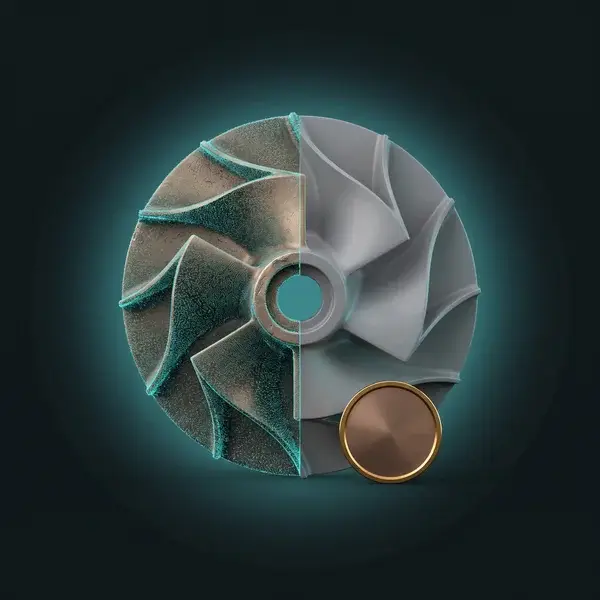
Impeller half scan points and half solid CAD with a bronze disc: measuring and material ID in reverse engineering services
Measuring, modeling, and material identification. You get: data to approve.
04
Improve
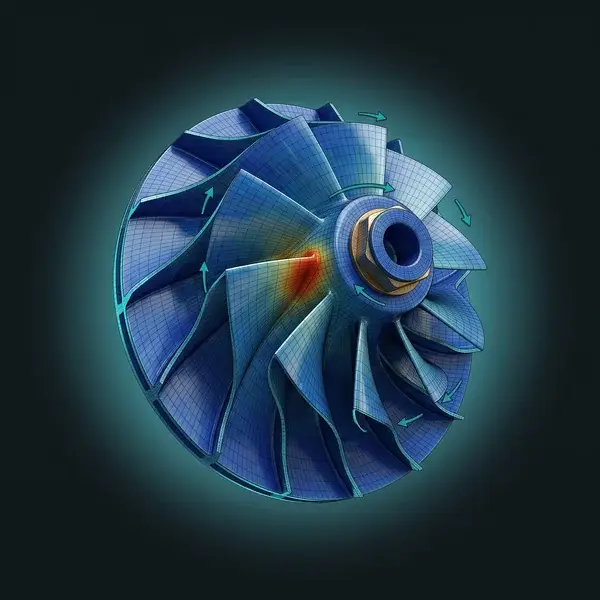
FEA of a rebuilt impeller, orange stress at a vane root fillet: the fix found before reverse engineering services release
FEA checks, fixes, and drawings ready to quote. You get: the design and the IP.
05
Support
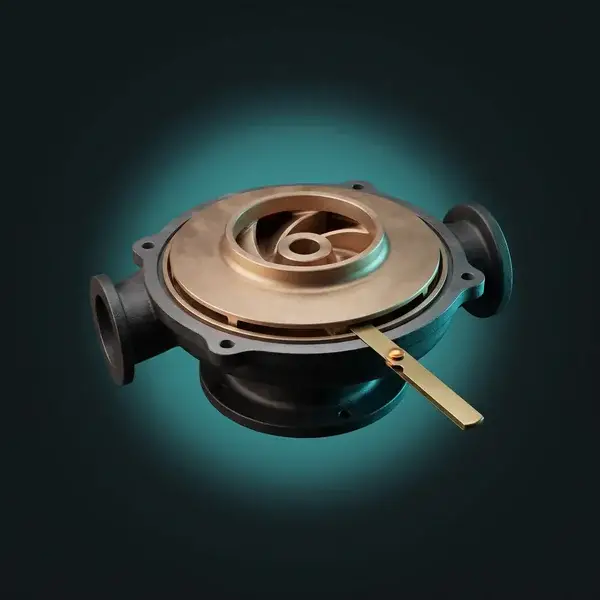
Impeller in a casing with a gold feeler gauge at the wear ring: first-article checks as reverse engineering services support
Supplier questions, first-article checks, and changes. You get: a team that stays.

You approve every measurement, design change, and its cost at every gate, so nothing that affects function surprises you. If we missed something in our QC, we fix it. If a supplier can’t make the part within three years, we fix that for you too.

Every day a part is missing costs output. Free roadmap.

Get Your Free Roadmap
Where We Solve It

Reverse Engineering Services Across Your Industries

The Same Legacy Part Risks In Mining, Marine, Cement, And Power

Mining Equipment Makers

Wear parts, gears, and castings from older machines, redrawn and improved with better materials too.

Keep old machines going.

Applications

Castings

Gears

Wear Parts

Explore Mining Work

Marine And Offshore Work

Pump, valve, and deck parts for older vessels, documented and improved for seawater and constant motion.

Keep your vessels at sea.

Applications

Pumps

Valves

Deck Parts

Explore Marine Work

Cement Plant Systems

Mill, kiln, and conveyor parts with no drawings, measured, modeled, and redesigned to last much longer.

Fewer surprise stops.

Applications

Mills

Kilns

Conveyors

Explore Cement Work

Power Generation Systems

Obsolete turbine, pump, and plant parts, redrawn and redesigned so outages don't wait on old sources.

Fewer forced outages.

Applications

Turbines

Pumps

Plant

See Power Gen Work
Related Solutions

Solutions Related To Reverse Engineering Services Work

Value Engineering And Machine Design That Improve What You Rebuild

Value Engineering Work

Take cost out of the parts themselves: same function, fewer parts, less material, and wider sourcing.

Lower cost per unit.

Applications

DFMA

FEA

Sourcing

See How VE Cuts Cost

Machine Design Services

Design or redesign machines and fixtures around cost, uptime, and service from the start, not after.

Design it right, once.

Applications

Machines

Fixtures

Uptime

See Machine Design

Every Solution We Offer

Prototyping, HALT, R&D, reverse engineering, and more. See every problem our engineering team solves.

Find your problem here.

Solutions

Prototyping

HALT

R&D

See All Solutions
Why PPS

Why Buyers Choose PPS For Reverse Engineering Services

A Team That Proves Every Rebuilt Part With Engineering Data

A Team, Not One Hire

FEA, CFD, CAD, DFMA, and testing under one roof. Engineering is a team sport, and you get the whole team.

One team, every skill.

Under One Roof

FEA

CFD

CAD

DFMA

Testing

Meet Our Engineers

SDVOSB Set-Aside Ready

Veteran-owned SDVOSB status gives defense and federal buyers a set-aside path to proven engineering.

Verify our SDVOSB status.

Credentials

SDVOSB

VOSB

CAGE 8ZK73

NAICS 541330

Verify SDVOSB Status

We Stand Behind It

Missed something in our QC? We fix it. Supplier can't make the part within three years? We fix that too.

Support for the long run.

We Fix

Our QC Misses

Supplier Gaps

Supply Chain

See How Clients Stay

Solutions, Not Hours

We price to the value we deliver, not hours logged. You buy a design that works, not more iterations.

Pay for the result only.

Collections

Gold

Platinum

Diamond

View Pricing Plans
FAQ

Reverse Engineering Services Questions Buyers Ask First

Straight Answers On Parts, Data, IP, Accuracy, And Price

How accurate are your reverse engineering services?

Measured To The Tolerances The Part's Function Actually Needs

Accuracy in reverse engineering services depends on two things: how well the part is measured, and how well those numbers become a design. We measure with methods matched to the part, such as 3D scanning, coordinate measuring, and hand gauges for critical features. Each fits the feature it checks. But a worn part shows where it has been, not where it started. Copy it exactly and you copy the wear. GAO describes reverse engineering as measuring an item to develop the technical data needed to reproduce it, both in function and in size. Function comes first, so an engineer has to decide what each dimension should be.

Fits, bearing seats, and sealing faces get tolerances based on function and mating parts. Other features get tolerances that keep it easy to make. You get a drawing a shop can quote, with critical dimensions called out. We also tear down competitor products; your right to use a teardown-informed design, including any patent clearance, is set in the contract. You approve the drawing before any part is cut.

Can you improve a part instead of copying it?

Yes: We Fix Why The Part Failed, Not Just How It Looked

Copying a part that keeps failing gives you a new part that fails the same way. Our reverse engineering services look at why the original wore, cracked, or broke. We check it in FEA against the real loads, study the failure surfaces, and confirm the material. Often the fix is simple: a larger radius, a better alloy, or a heat treatment the original never had. Sometimes the duty has grown since the part was designed, so it needs more strength than it was ever given. To confirm the alloy, labs test against reference materials from the NIST Material Measurement Laboratory.

We also look at how the part is made. A casting only one foundry can pour may become a machined part or a weldment many shops can quote. That is legacy part redesign: same fit and function, longer life, and wider supply. If a whole machine needs work, our machine design services take it further. You approve every change, and the IP is yours by default, set in your contract.

Can PPS work with our manufacturer or test lab?

Bring Your Own Manufacturer or Lab, or Work With Our Network

Yes. Our reverse engineering services work with the shops and labs you already trust, or with our partner network of machine shops. Many projects use both. What matters is that one engineering team coordinates them, so the builder and the lab always work from the latest released design and data.

When every vendor reports to you separately, you become the integrator. Design changes travel by email, parts get cut to old drawings, and test results arrive without anyone tasked to act on them. The Department of Defense's IPPD Handbook organizes programs around integrated product teams for this reason, with design, manufacturing and test under one shared plan.

PPS manages your builders and test labs inside one engineering loop. We release the design, track every build and test, read the results and make the fix ourselves. Data and NDAs are set up between all parties at the start. You decide how far we take the design, up to the start of production. The IP is yours by default, as set in your contract.

What do you need from us to start?

Send Your Data And Targets; We Build The Roadmap From There

To start a project with our reverse engineering services, send what you have, in any format. That usually means the part itself, or several if they vary, plus photos and any old drawings or notes. Add the service history, the mating parts or assembly it fits, and your targets for life, cost, or supply. Old invoices help too. Missing data is the most common reason engineering projects stall, because a model built on guessed inputs gives a guessed answer. That is why we don't start the work until every data set is in.

Once it is, the first step is a free assessment of your project scope. We confirm what the work can and can't answer, and tell you what is still missing. Then we send a roadmap proposal with scope, targets, and approval gates. Every project is scoped on its own, so the roadmap sets the schedule, not a stock promise. NDAs are available before you share any files. For gaps in material data, NIST material measurement data is a good first stop.

Who owns the design and the models?

The Design And Models Are Yours By Default, Set In Your Contract

You own the design, the drawings, and the models from your reverse engineering services project by default, as set in the contract. When an OEM or partner manufacturer is involved, the contract spells out who owns what. Some firms keep the models, or license them back to you, so every later change sends you back to them. That locks your product to one vendor and makes design reviews harder, because your team can't open the evidence behind the decisions. You receive the native CAD, the drawings, the simulation model files, and the documented results. Your engineers can then check the work, rerun a load case, or hand the package to a supplier or customer.

We sign mutual NDAs before any of your data is shared, and your files stay in our controlled project folders while we work. If your program has export-control or customer data rules, tell us at the start and we will set up the data handling to match them. For defense programs, the State Department ITAR guidance sets the rules we follow.

What happens if the new part doesn't fit or fails?

If We Missed It In Our QC, We Fix It; Test Data Improves Design

If the new part doesn't fit or fails, we find out why and fix the design. Hard engineering carries unknowns on any project: real loads, material lots, and assembly effects never match a model perfectly. With reverse engineering services from PPS, you approve the data at each gate. A test result is then checked against predictions you have already seen, not a black box. A failure in test is data. It shows which assumption was wrong: a load, a material property, or a boundary condition. That data improves the model and the design.

When testing is in scope, we plan the test to confirm the margins that matter most. Then we correlate the model to the results, following ASME verification and validation practice. If the miss was ours, because something slipped through our QC review, we fix it. If the test uncovers a condition nobody knew about, we scope the change with you and update the roadmap. Either way, you get a clear answer and a path to a design that holds.

How are reverse engineering services priced?

Priced To The Value We Deliver, Never To The Hours We Log

We price reverse engineering services to the value they deliver, not the hours we log. Hourly billing rewards extra iterations, so the cheapest quote often becomes the most expensive project once tooling, rework, and field failures show up. Our incentive is to get the design right the first time. We engage by fit, not as a ladder. Gold (from $35K): you have one project and need help with it. Platinum (from $15K/mo): you have recurring work at a steady rhythm. Diamond (from $800K/yr): you have a long development program, often multi-year.

Gold is never required, and some clients start at Platinum or Diamond. These are starting points, not quotes; your roadmap sets the price. We price to the value we deliver, not the hours we log. If the value isn't there for you, we'll say so in the assessment. Our engineering consultant pricing page explains how each collection works in more detail.

A part nobody can make? Send it to us. Get a free roadmap.

Free Project Scope Assessment. No Obligation. NDAs Available.

Bring Parts Back With PPS Reverse Engineering Services

Leave With A Roadmap That Ranks Every Part By Risk And Value

Send your parts, photos, and service history. We review your project scope in a free assessment and reply within one business day with next steps.

SDVOSB Certified
VOSB Certified
CAGE 8ZK73
NAICS 541330

On-site assessments that require travel are quoted separately.