
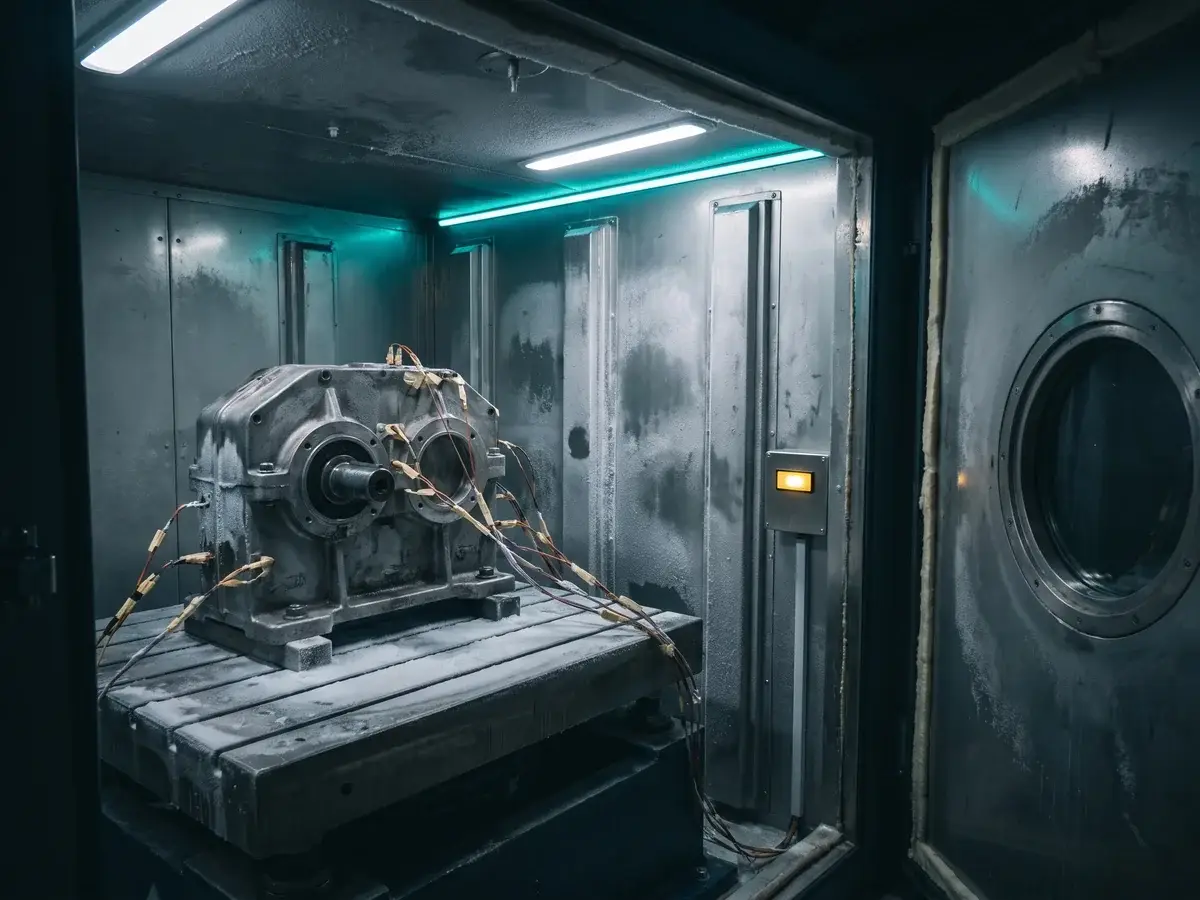
Push the design past its limits in the lab to find weak points before your customers find them in service.
Find the weak point.
Covers
HALT
Limits
Reliability
Couple thermal, structural, and flow loads in one model when a single physics view misses the real failure.
See the coupled risk.
Covers
Thermal
Structural
Flow
From concept to launch through stage gates you approve, with simulation and testing where the design needs it.
From concept to launch.
Covers
Concept
Stage-Gate
Testing
Single-point design failures ground fleets and trigger costly program reviews.
Find it before flight.
Applications
Flight FEA
Buckling
CFD
Late validation cycles delay vehicle launches across model-year gates.
Ready for the next gate.
Applications
EV Thermal
Crash
NVH
Failed classification reviews force long hull redesign and rework loops.
Built for class review.
Applications
Hull FEA
ABS / DNV
Hydro CFD
Promised energy savings disappear when models miss real operating data.
Validate energy savings.
Applications
Turbine CFD
Heat Recovery
Plant FEA
Who Writes These Articles, And Where Do The Methods Come From?
Engineers write every verification and validation article on this page. The people who run PPS projects write about problems they see in real designs. They cover what went wrong, how they checked it, and what they would do next time. The articles teach methods, not sales pitches.
Advice from people who have never tested a part is easy to find and hard to trust. So each post names its author and shows when it was last updated. Nick Duff, Co-Founder & Chairman, CEO, is an aerospace stress engineer on flight-critical aerospace and defense programs. Tom Cushing, Co-Founder & CTO, is a licensed Professional Engineer (PE).
Tom leads the tools, methods, and design QC our engineers use from assessment to delivery. PPS engineers run FEA, CFD, CAD, and DFMA in-house. Every design goes through that QC, and the articles follow the same methods. You can read their full backgrounds on our About page. If an article does not match your own project, tell us and we will check. We reply within one business day.
Can I Use The Methods In These Articles On My Own Designs?
Yes. Each verification and validation article explains the method step by step, so you can apply it to your own design today. It covers what to set up, what to check, and what a good result looks like. We write for practicing engineers and the managers who lead them.
There is a limit, though. An article cannot see your loads, materials, test data, or drawings. The same method can mislead you when the inputs are off. NASA's guidance on product validation puts it simply: verification proves the product was done right, and validation proves it was the right product. Both need your real data.
Use the articles to plan a test, review a supplier's validation, or train a new analyst. Bring the hard calls to us. That is what our free assessment is for. You send the data, and an engineer who can see the whole problem reviews your project scope. You get a roadmap that shows what we would check, change, or test next, and why. We reply within one business day.
How much testing should a design V&V plan include?
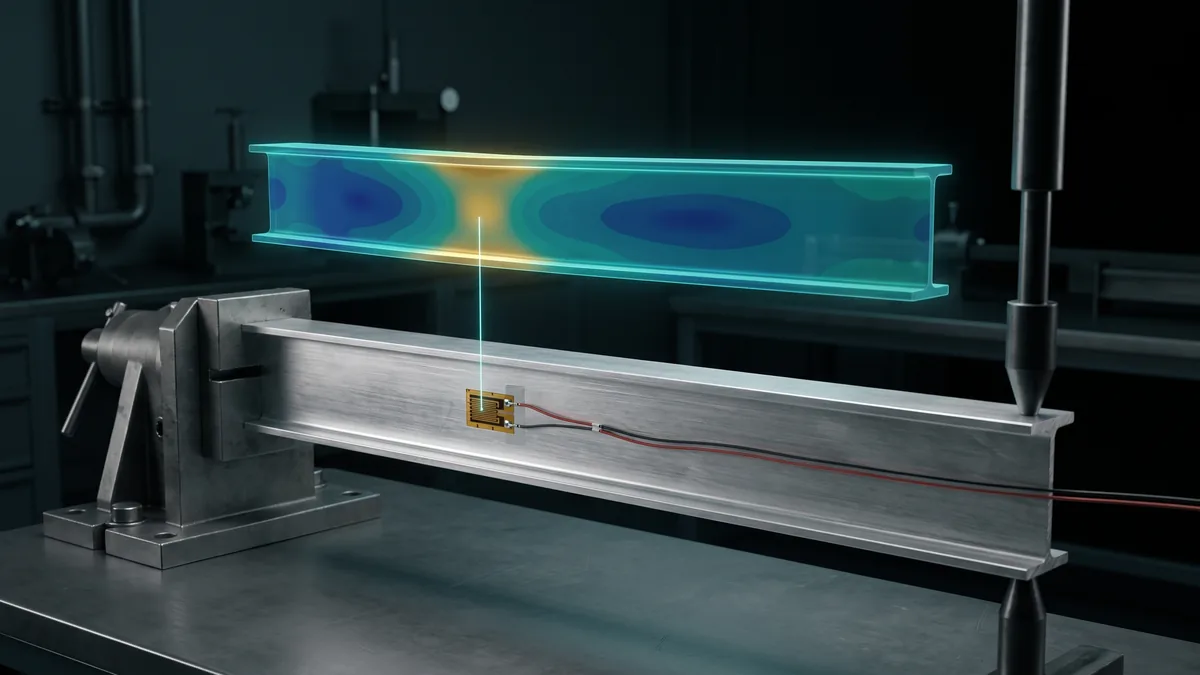
Verification and validation decide how much testing a design still needs. Verification checks that the model solves its equations correctly: mesh convergence, units, boundary conditions, and a hand calculation that agrees. Validation checks that the model matches reality, using a test on a real part. Both answer different questions.
Skip either step and the model is a guess with good graphics. Standards such as ASME V&V 10 exist because a model that looks right can still be wrong where it matters most. Test too little and a failure reaches the field. Test too much and every program pays for prototypes the model could have replaced.
Measure the test where the model predicts the highest stress or the critical flow. Once a model is validated for one design, similar designs under similar loads often need less testing. Outside that range, or when a failure would be costly or unsafe, test again. If you are unsure, send us the model, the test data, and the decision you face. We reply within one business day.